ADA-Compliant Line Marking: Meeting Canadian Accessibility Standards
Ensuring your parking facility is accessible is more than just a legal requirement; it is a commitment to inclusivity and safety for all community members.
Understanding Accessibility in Canadian Parking Facilities
When we discuss accessibility in North America, the conversation often revolves around the Americans with Disabilities Act (ADA). However, for property owners in Canada, it is vital to understand that while the term 'ADA' is widely used as a benchmark for global best practices, Canadian facilities must adhere to the Accessibility for Ontarians with Disabilities Act (AODA) and the National Building Code of Canada.
Proper line marking is the backbone of an accessible parking lot. It dictates where people with mobility challenges can park, how they navigate toward entrances, and how they interact with the surrounding environment safely. At Capital Parking Lot Line Painting, we specialize in ensuring that your pavement markings meet these stringent regulatory standards, providing peace of mind for business owners and safety for visitors.
The Critical Role of Precision Line Marking
Accessibility isn't just about painting a blue box. It involves a complex set of dimensions, symbol placements, and aisle widths. If a line marking project is executed incorrectly, it can create hazards, such as preventing a wheelchair user from fully deploying a ramp or blocking a pedestrian walkway.
In growing urban centers like Guelph, where commercial development is constantly evolving, staying ahead of accessibility compliance is essential. Whether you are managing a retail plaza or a municipal building, the precision of your line painting can make the difference between a seamless visitor experience and a potential liability.
Key Elements of Compliant Marking:
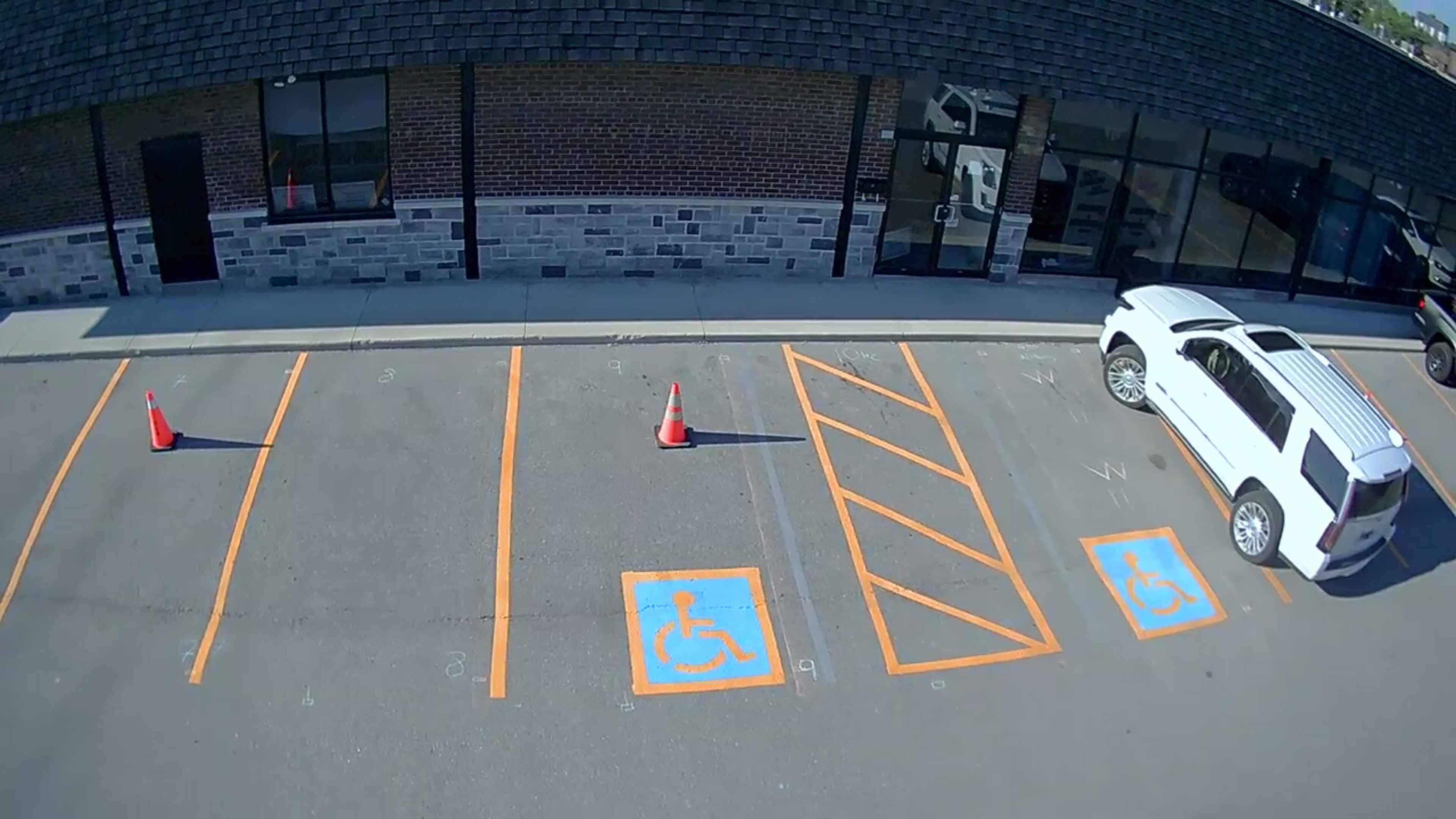
- Accessible Stalls: Specific dimensions for both standard accessible spots and van-accessible spots.
- Access Aisles: The striped areas adjacent to accessible stalls that allow for ramp deployment.
- International Symbol of Accessibility: High-contrast, clearly defined icons that are easily recognizable.
- Directional Markings: Clear paths that guide users from the parking stall to the nearest accessible entrance.
- High-Contrast Colors: Using specific color palettes to ensure visibility for those with visual impairments.
Common Mistakes in Accessibility Line Painting
Many property managers overlook the nuances of line marking until an inspection occurs or, worse, an accident happens. Capital Parking Lot Line Painting has seen many common errors that can be easily avoided with professional oversight:
1. Incorrect Aisle Widths: Many assume a standard width is sufficient, but van-accessible spots require significantly wider aisles to accommodate mobility aids.
2. Faded Markings: Over time, UV exposure and heavy traffic wear down paint. Faded lines are not just an eyesore; they are a compliance failure.
3. Poor Material Choice: Using low-grade paint that lacks reflectivity can make markings invisible at night.
4. Improper Symbol Placement: Placing the accessibility icon off-center or too close to the stall lines can confuse users.
Why Professional Line Marking Matters in Guelph and Beyond
As a top 30 city in Ontario, Guelph is seeing increased scrutiny regarding urban accessibility. Local businesses must ensure their infrastructure supports a diverse population. By investing in professional line marking, you are not just following the law; you are building a brand that values every customer.
Working with experts like Capital Parking Lot Line Painting ensures that your project is done right the first time. We understand the local climate, the specific regulatory requirements of Ontario, and the technical precision required to deliver high-quality, long-lasting results.
Ready to Upgrade Your Facility?
Don't wait for a compliance audit to realize your parking lot is outdated. Ensure your facility is welcoming and legal with professional line marking services.