Common Myths About Parking Lot Sealcoating Debunked
Maintaining a professional appearance and ensuring the longevity of your asphalt is a top priority for business owners. However, misinformation often leads to poor maintenance decisions. Let's clear the air about sealcoating.
The Importance of Asphalt Maintenance in Windsor
As a business owner in Windsor, you know that the weather can be unpredictable. From harsh winters to humid summers, the asphalt in our top 30 Ontario cities undergoes significant stress. One of the most common ways to protect this investment is through sealcoating. Yet, many property managers hesitate due to misconceptions. At Capital Parking Lot Line Painting, we believe that an educated client is a successful one. Understanding the science behind sealcoating can save you from premature pavement failure.
Myth #1: Sealcoating is Just for Aesthetics
Many people believe that sealcoating is simply a way to make a parking lot look "new" and dark again. While a fresh coat certainly improves curb appeal, its primary function is structural protection. Sealcoating acts as a barrier against:
- UV Radiation: Sunlight breaks down the bitumen binder in asphalt.
- Water Penetration: Moisture is the number one enemy of asphalt, leading to potholes.
- Chemical Spills: Oil, gas, and salt can erode the surface if left unprotected.
- Oxidation: Prevents the asphalt from becoming brittle and cracking.
By neglecting sealcoating, you aren't just losing visual appeal; you are inviting structural decay that will eventually require a much more expensive resurfacing project.
Myth #2: You Should Sealcoat Every Single Year
There is a common misconception that sealcoating is an annual requirement. In reality, applying sealant too frequently can actually be counterproductive. The ideal frequency depends on the level of traffic, the type of sealant used, and local environmental factors in Windsor. Most commercial lots require treatment every 2 to 4 years. Over-applying can lead to buildup and unnecessary maintenance cycles. Capital Parking Lot Line Painting recommends a professional assessment to determine the exact timing needed for your specific surface.
Myth #3: Sealcoating Fixes Major Cracks and Potholes
This is perhaps the most dangerous myth. Sealcoating is a preventative maintenance tool, not a structural repair tool. If your parking lot has deep fissures, large cracks, or significant potholes, applying sealer over them is a waste of resources. The sealer will simply sink into the gaps and fail shortly after application.
The Correct Order of Operations
To achieve a long-lasting result, your maintenance should follow a specific hierarchy:
- Cleaning: Removing all debris, dirt, and vegetation.
- Crack Filling: Using specialized hot-pour rubberized fillers for deep cracks.
- Patching: Addressing potholes and structural depressions.
- Sealcoating: Applying the protective layer over the repaired surface.
- Line Marking: Applying fresh Line Marking to ensure safety and organization.
At Capital Parking Lot Line Painting, we emphasize that proper preparation is the foundation of a quality job.
Myth #4: All Sealants are Created Equal
Not all sealcoating products are the same. Some are water-based, while others are coal-tar or asphalt-emulsion based. The quality of the material used by your contractor dictates how long the protection lasts. Cheap, low-grade sealants may look good for a month but will flake and peel under the heavy traffic typical of commercial zones. Investing in high-quality materials is essential for long-term durability.
Visualizing the Result
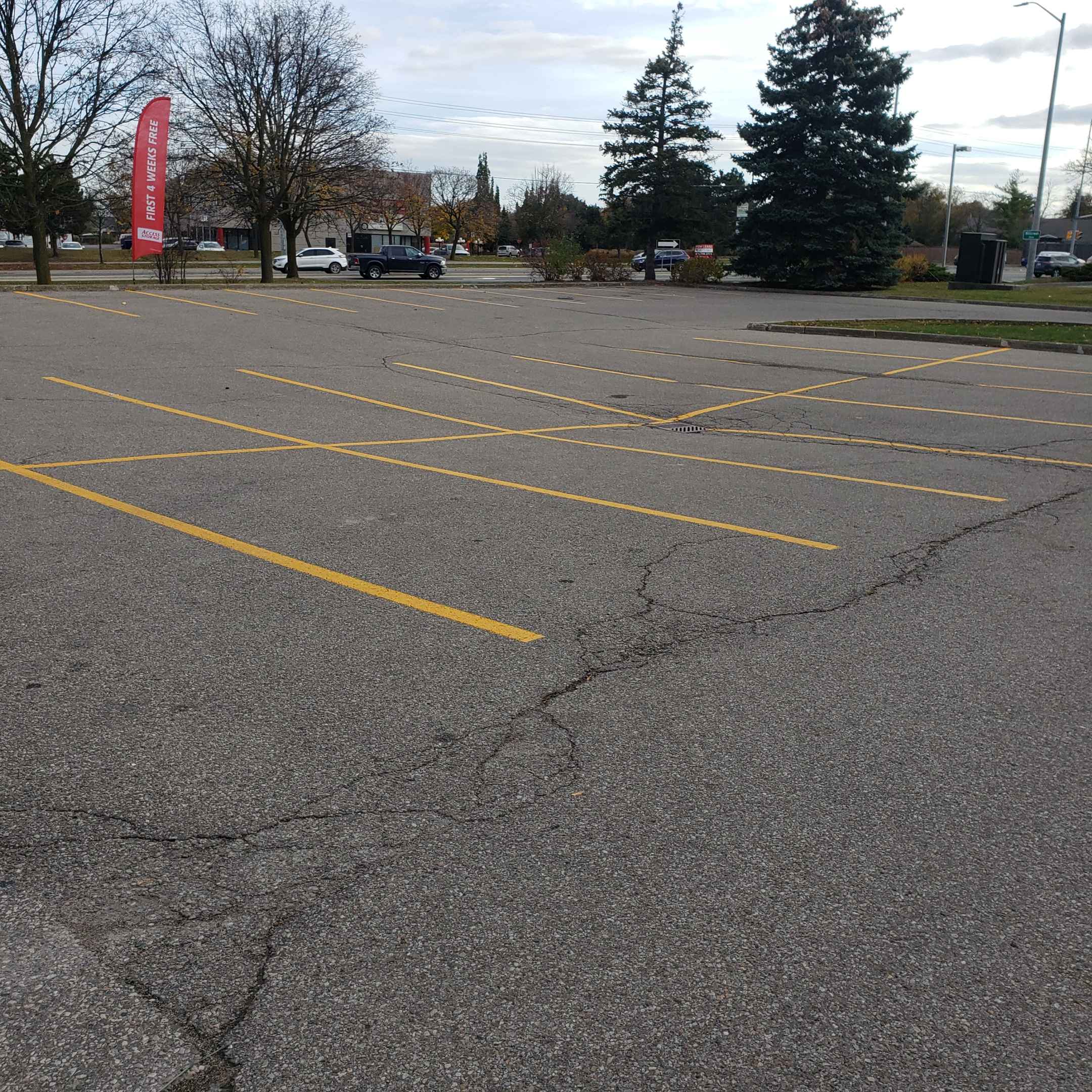
A well-maintained lot doesn't just look better—it functions better. When combined with professional Line Painting, your lot becomes a clear, safe, and inviting space for customers and employees alike.