How Crack Width and Depth Affect Repair Methods
Not all cracks are created equal. Discover why measuring dimensions is the first step to professional pavement longevity.
When property owners in London notice cracks appearing in their parking lots, the instinct is often to fix them immediately. However, a "one size fits all" approach to asphalt repair is a recipe for premature failure. At Capital Parking Lot Line Painting, we understand that the success of a repair depends entirely on the geometry of the crack itself. Specifically, the width and the depth of the fissure dictate which materials and techniques must be employed to prevent water infiltration and subgrade erosion.
In this guide, we will break down the technical differences between crack types and how professional contractors approach each one to ensure your investment lasts through the harsh Ontario seasons.
The Critical Role of Crack Width
Crack width is perhaps the most visible indicator of pavement distress. As asphalt ages due to UV exposure and heavy traffic loads, it loses flexibility, leading to various types of fractures. We generally categorize these into three width-based groups:
1. Hairline Cracks (Less than 1/4 inch)
Hairline cracks are often the result of shrinkage or minor thermal expansion. While they may look insignificant, they act as capillary tubes, drawing moisture deep into the asphalt layers. For these, a liquid-based crack sealant is typically used. This sealant is thin enough to penetrate the narrow gap, creating a waterproof seal that prevents further oxidation.
2. Medium Cracks (1/4 inch to 1/2 inch)
These are the most common cracks found in commercial parking lots. At this stage, liquid sealants alone may not provide enough volume to fill the void effectively. Instead, a semi-solid rubberized crack filler is often required. This material provides a balance of flexibility and volume, allowing the pavement to expand and contract without the seal breaking.
3. Wide Cracks (Greater than 1/2 inch)
When cracks exceed half an inch, they are no longer just surface issues; they are structural warnings. Filling these with simple sealant is often a temporary fix. At Capital Parking Lot Line Painting, we recommend more robust solutions for wide cracks, such as crack bridging or even localized patching, to ensure the structural integrity of the surface is restored.
The Hidden Factor: Crack Depth
While width is easy to see, depth is often the most overlooked variable. A shallow crack might only affect the surface course, whereas a deep crack may extend through the entire asphalt thickness, reaching the aggregate base layer. If a repair does not account for depth, the sealant will simply sink into the void, leaving the surface exposed.
To combat this, professionals use "backer rods." These are flexible foam tubes inserted into the crack to a specific depth. This serves two purposes:
- It controls the depth of the sealant, ensuring a proper "reservoir" is created.
- It prevents the sealant from flowing too deep into the subgrade.
- It allows the sealant to bond correctly with the sidewalls of the crack.
- It provides a cost-effective way to fill large volumes without wasting expensive sealant.
Choosing the Right Repair Strategy
Because every parking lot in London faces different environmental stresses, the repair method must be customized. A professional assessment involves evaluating the following:
Material Selection
From hot-applied rubberized asphalt to cold-applied liquids, the material must match the crack's dimensions and the expected traffic volume.
Environmental Timing
Temperature and moisture levels at the time of application are vital. Sealants require specific curing windows to bond effectively.
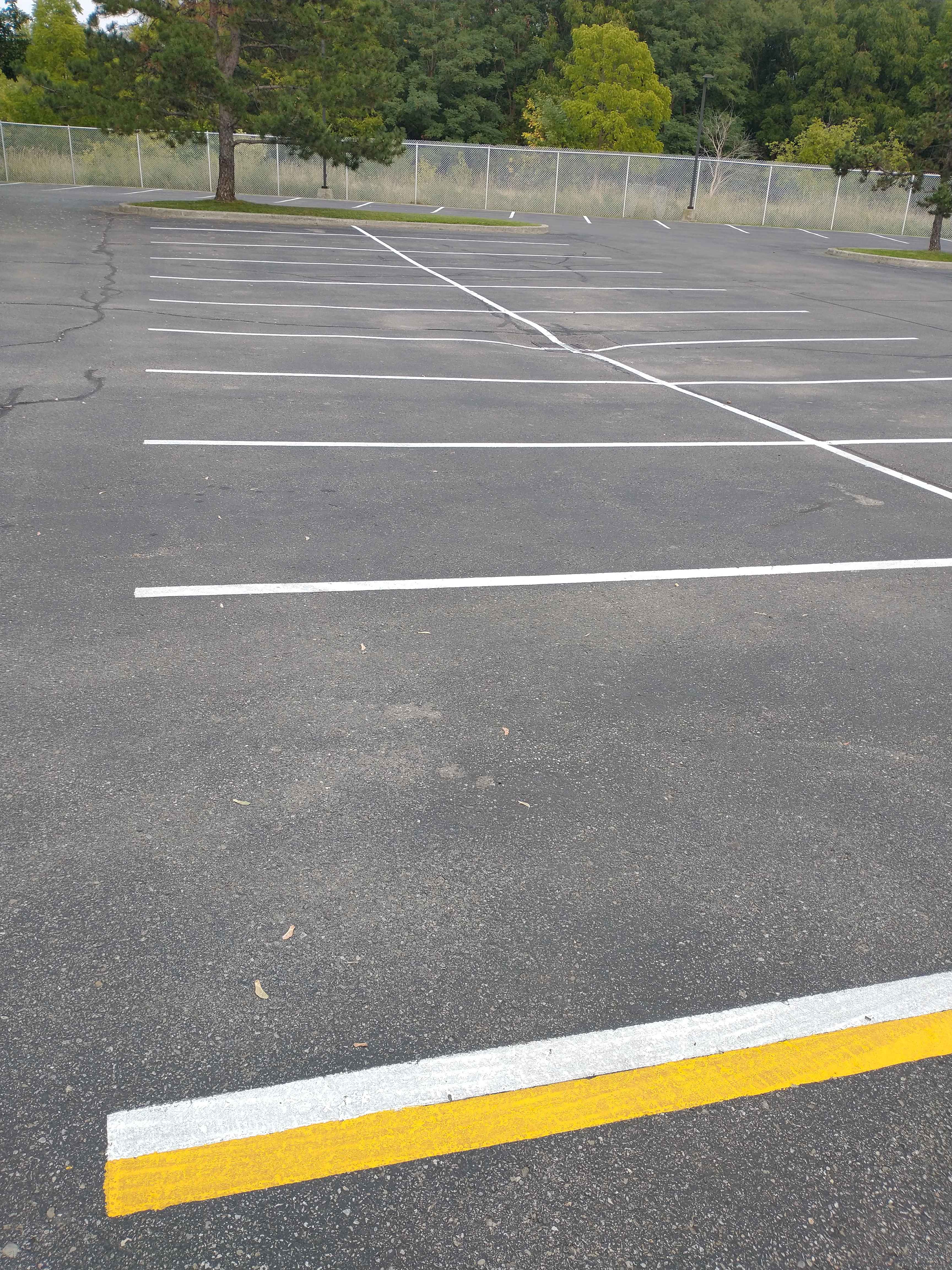
Once the cracks are repaired, the next step in maintaining a professional appearance is often Line Marking. Freshly repaired cracks provide a clean, dark canvas that makes new Line Painting stand out, enhancing both safety and curb appeal.
Common Mistakes to Avoid
Many property managers attempt DIY repairs, which often lead to higher costs in the long run. Here are the most common errors:
- Filling cracks without cleaning out debris, dirt, or vegetation.
- Applying sealant over wet cracks, which prevents adhesion.
- Using the wrong material (e.g., using liquid filler for a wide, deep crack).
- Ignoring deep cracks that require structural attention.
By partnering with experts like Capital Parking Lot Line Painting, you ensure that these mistakes are avoided and that your pavement is treated with the technical precision it requires.
Ready to protect your pavement?
Don't wait for a small crack to become a massive pothole. Contact our team today for a professional assessment and long-lasting repair solutions.