How to Design Parking Lot Layouts That Maximize Capacity
Optimizing every square inch of your asphalt is the key to increasing property value and customer convenience.

For commercial property owners, every square foot of pavement represents potential revenue. Whether you manage a retail complex, a busy office building, or a multi-unit residential site, the efficiency of your parking lot directly impacts your bottom line. A poorly designed layout leads to congestion, frustrated drivers, and wasted space. Conversely, a masterfully planned layout can significantly increase the number of vehicles you can accommodate without expanding your physical footprint.
In growing urban hubs like Brampton, where space is at a premium, maximizing capacity isn't just a luxury—it is a business necessity. Achieving this balance requires a blend of geometric precision, understanding traffic patterns, and high-quality line marking to guide users effectively.
The Fundamentals of Capacity Maximization
Before you start drawing lines, you must understand the core variables that dictate how many cars can fit into a given area. It isn't just about cramming vehicles together; it is about creating a functional ecosystem.
1. Selecting the Right Parking Angle
One of the most impactful decisions in layout design is choosing between ninety-degree (perpendicular) parking and angled parking.
- Perpendicular Parking (90-degree): This is the gold standard for maximizing density. It allows for the highest number of stalls per linear foot, making it ideal for large, open lots. However, it requires wider drive aisles to allow for easier turning.
- Angled Parking (45 or 60-degree): This style is much easier for drivers to navigate, especially in tighter spaces. While it may result in fewer total stalls, it allows for narrower drive aisles, which can sometimes save space in long, narrow lots.
2. Optimizing Drive Aisle Width
The aisle is the artery of your parking lot. If the aisles are too wide, you are wasting space that could be used for stalls. If they are too narrow, you create bottlenecks and safety hazards. Professional designers work to find the "sweet spot" based on the type of parking selected. Once the layout is finalized, Capital Parking Lot Line Painting ensures these aisles and stalls are clearly defined to prevent accidental encroachment.
Strategic Layout Considerations
Beyond the basic geometry, several advanced factors can influence how effectively your lot functions. When planning projects in high-traffic areas like Brampton, these details become even more critical.
Traffic Flow and Directionality
A common mistake is designing a lot that allows for too much conflicting movement. Implementing one-way traffic patterns can often increase capacity because it allows for narrower aisles. By forcing a specific direction, you reduce the need for wide turning radii, effectively reclaiming space for additional parking stalls.
The Role of Accessibility and Compliance
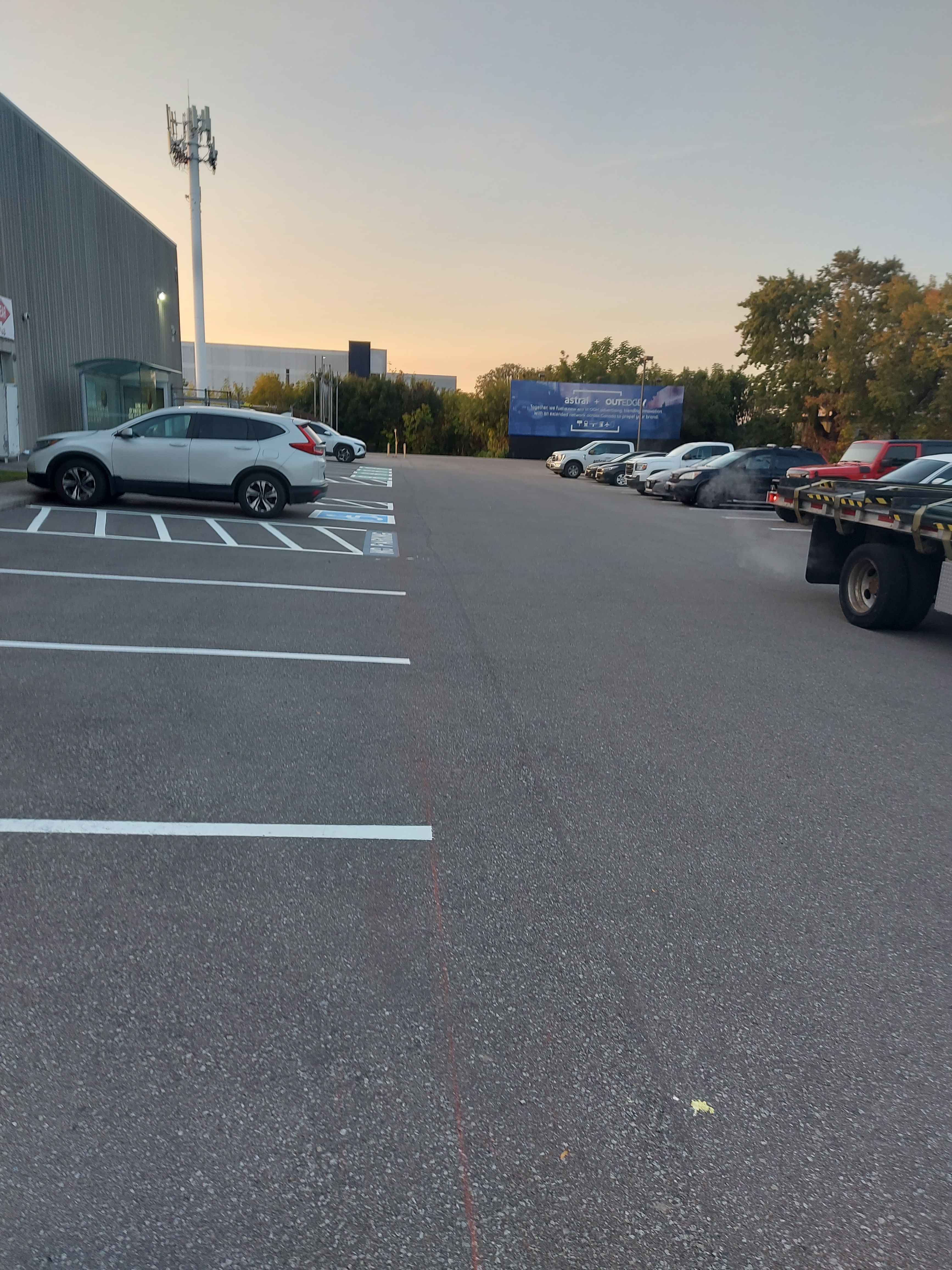
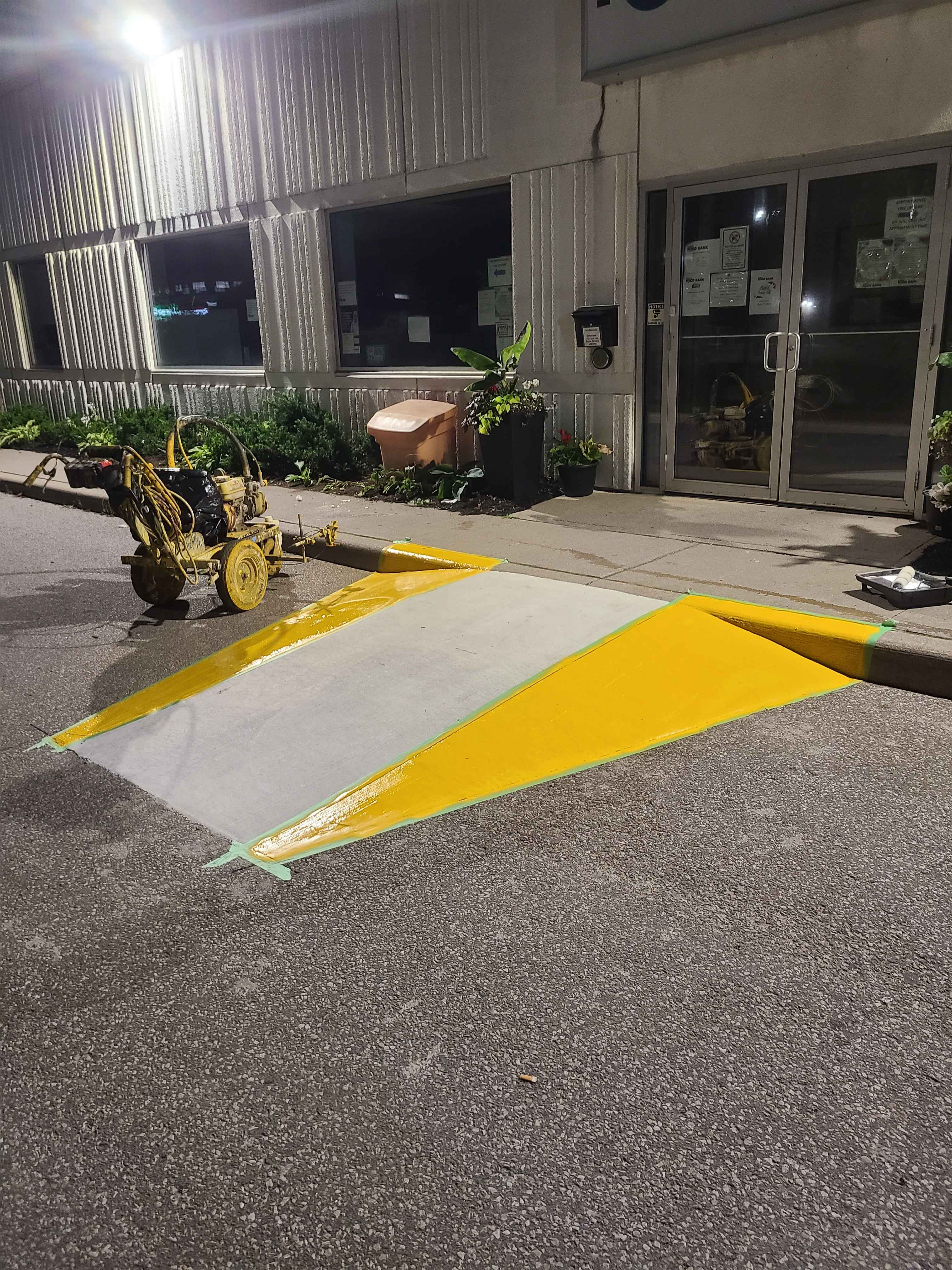
Maximizing capacity does not mean ignoring the law. ADA (Americans with Disabilities Act) or local accessibility standards must be integrated into the design from day one. Proper placement of accessible stalls—near entrances and with adequate loading zones—is mandatory. Capital Parking Lot Line Painting specializes in ensuring these critical zones are marked with precision to maintain both compliance and safety.
Common Mistakes to Avoid
Even with the best intentions, many property owners fall into traps that decrease efficiency:
- Ignoring Curb Radii: Sharp turns can lead to vehicle damage and require more space than necessary.
- Inconsistent Stall Sizes: Varying widths can lead to "dead zones" where no vehicle can fit.
- Neglecting Line Marking Quality: Faded or crooked lines cause driver confusion, leading to inefficient parking and wasted space.
- Poor Drainage Planning: Water pooling can degrade your asphalt, forcing expensive repairs and reducing the usable area.
The Importance of Professional Line Marking
A perfect layout on paper is useless if it isn't executed perfectly on the ground. High-visibility line marking is the final, crucial step in the design process. Clear, crisp lines do more than just look professional; they act as a silent guide for drivers, ensuring they park within their designated boundaries and respect traffic flow patterns.
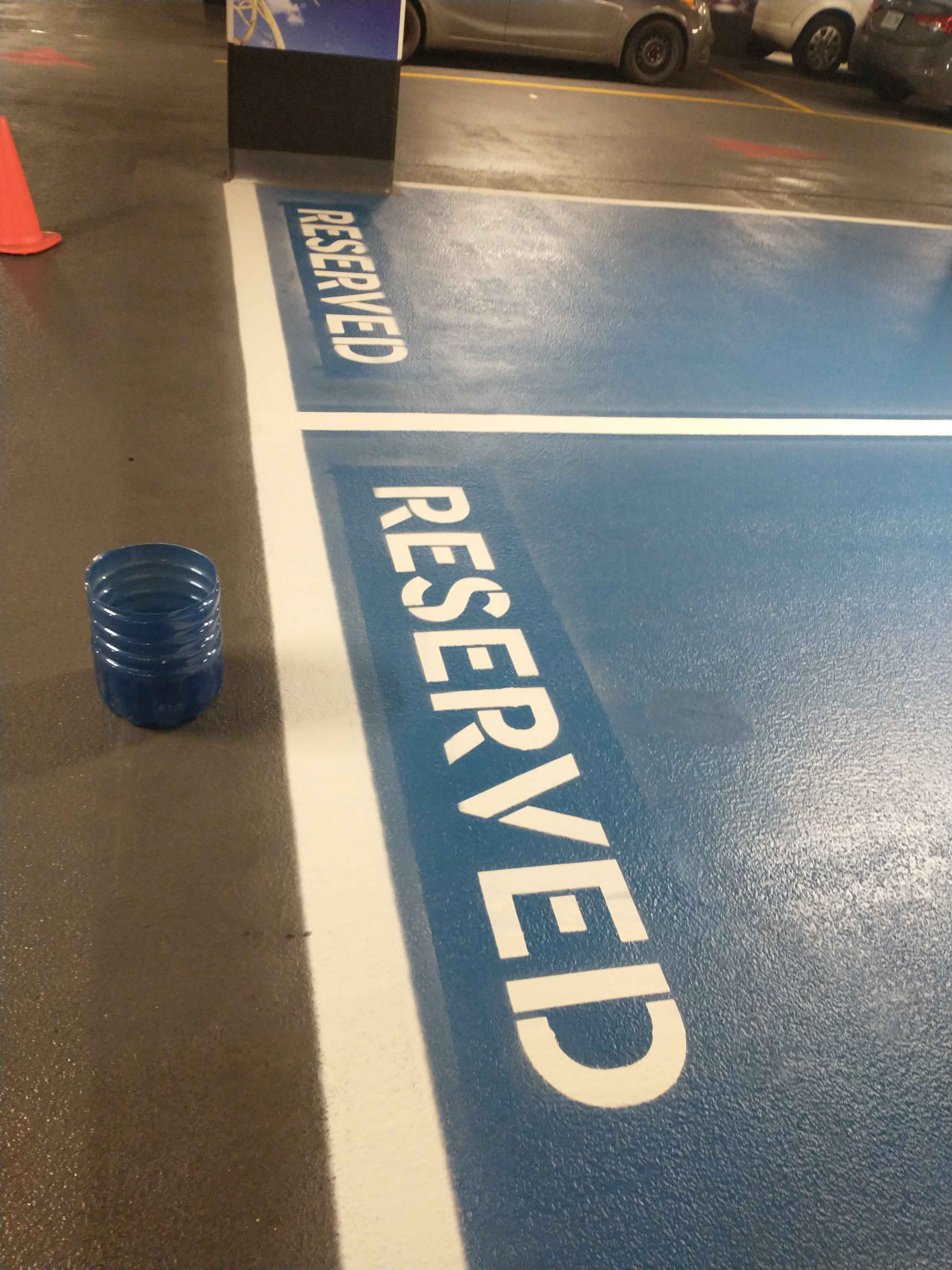
When you work with Capital Parking Lot Line Painting, you aren't just getting paint on the ground; you are getting a strategic implementation of your design. Our team ensures that every stall, aisle, and handicap symbol is placed with mathematical accuracy to support your goal of maximum capacity.
Ready to Optimize Your Space?
Don't let wasted pavement cost you customers. Whether you need a complete redesign or a fresh application of high-quality line painting, our experts are here to help you maximize your property's potential.