How to Integrate Accessible Parking Symbols Properly
Ensuring your parking facility is inclusive and compliant requires more than just a blue square; it requires precision in design and execution.
The Importance of Accessible Parking Design
In any commercial or residential property, accessibility is not just a legal requirement; it is a hallmark of a well-managed facility. When we talk about integrating accessible parking symbols, we are discussing the vital communication between the property owner and the individuals who rely on these designated spaces. Proper symbol integration ensures that people with disabilities can navigate your lot with dignity, safety, and ease.
For property owners in Ajax, maintaining these standards is crucial for community integration and compliance with local accessibility regulations. A poorly marked space is just as problematic as a missing one, as it can lead to confusion, accidental blockage, and safety hazards.
Key Components of Accessible Parking Integration
Integrating these symbols involves much more than simply applying a stencil. It requires a holistic approach to the layout of the parking stall. At Capital Parking Lot Line Painting, we emphasize that the symbol must work in harmony with the surrounding markings.
1. The International Symbol of Accessibility
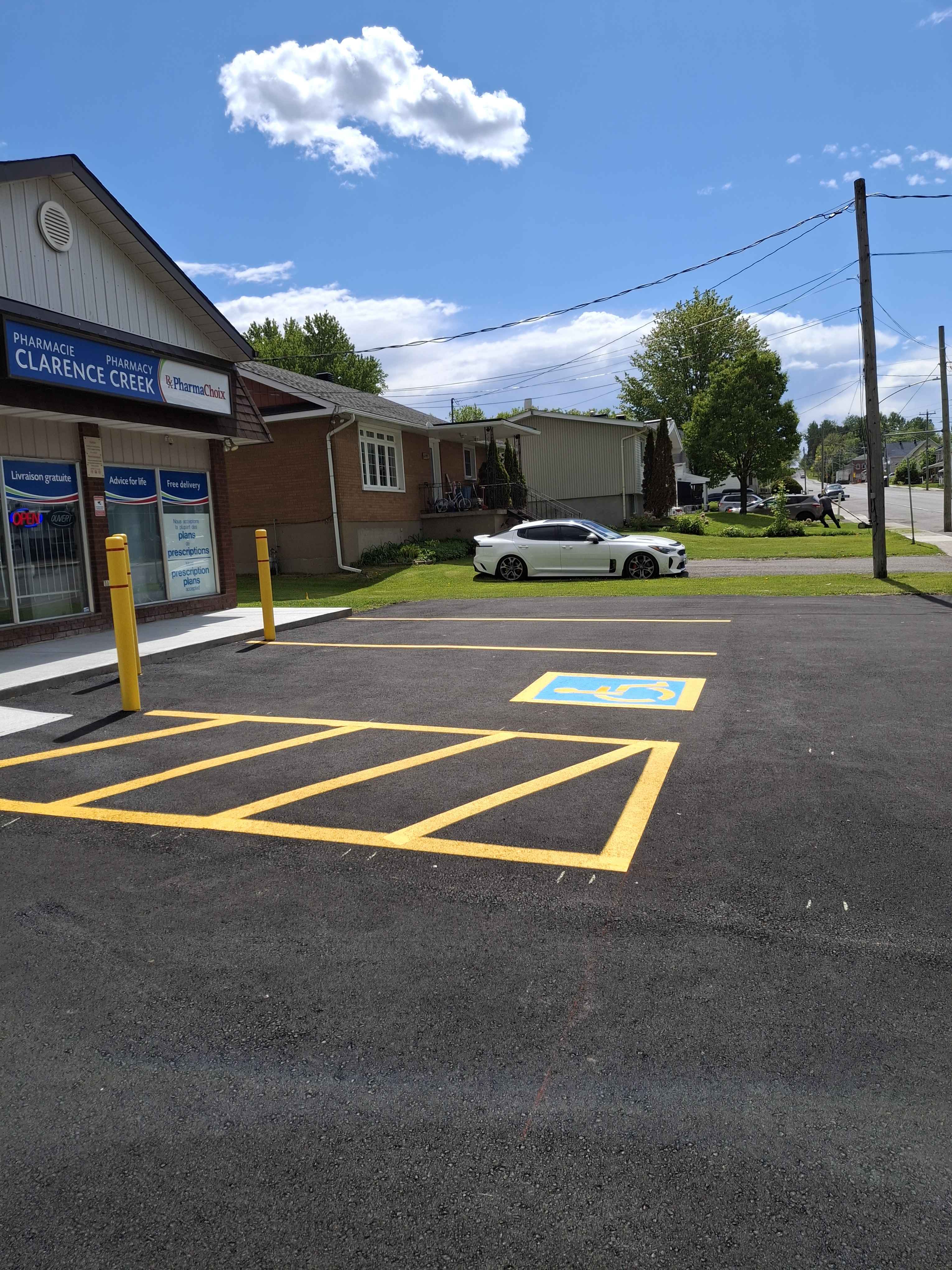
The most recognizable element is the International Symbol of Access (the wheelchair icon). This symbol must be clearly visible, high-contrast, and placed within the designated area. Whether using thermoplastic or high-durability paint, the clarity of this icon is paramount.
2. The Access Aisle
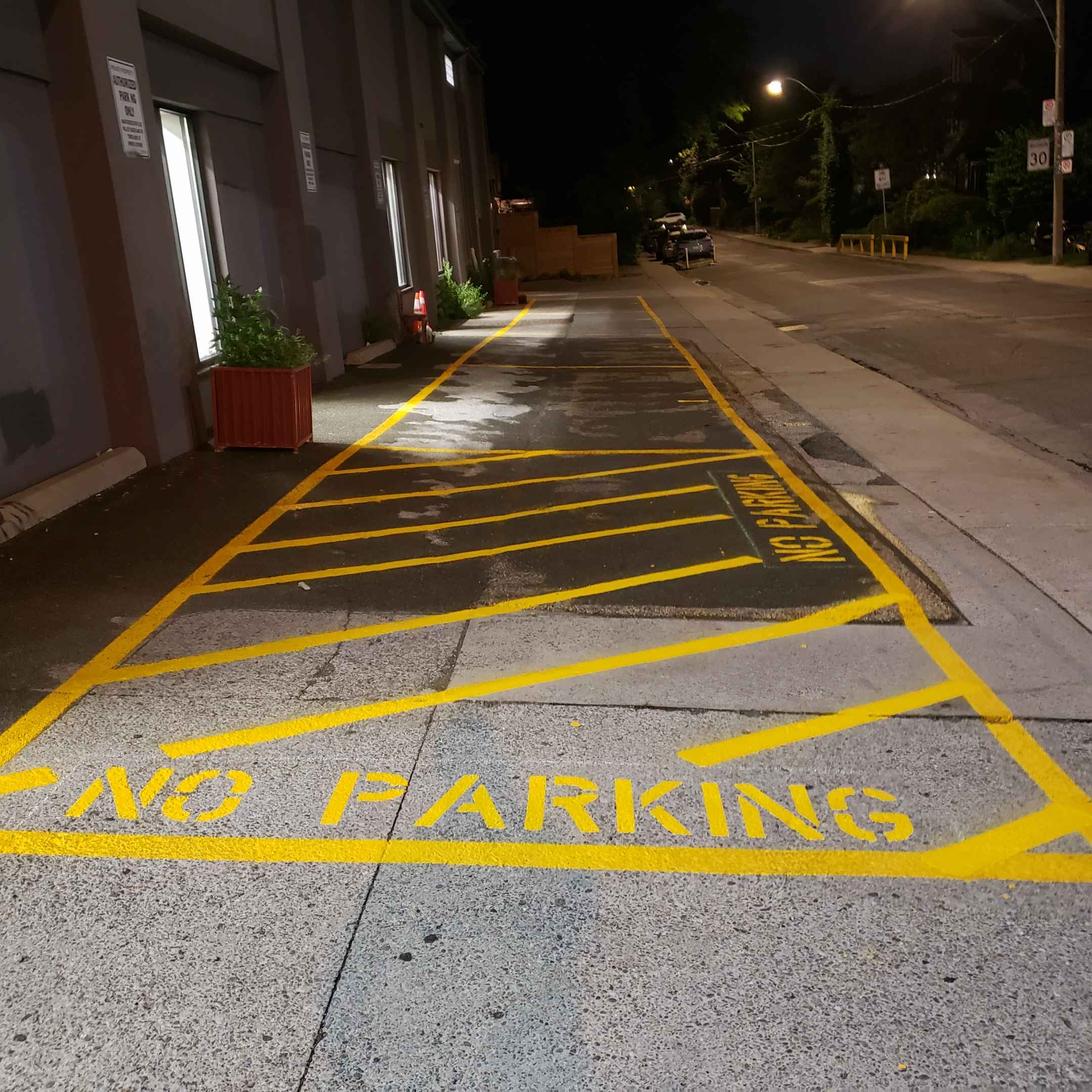
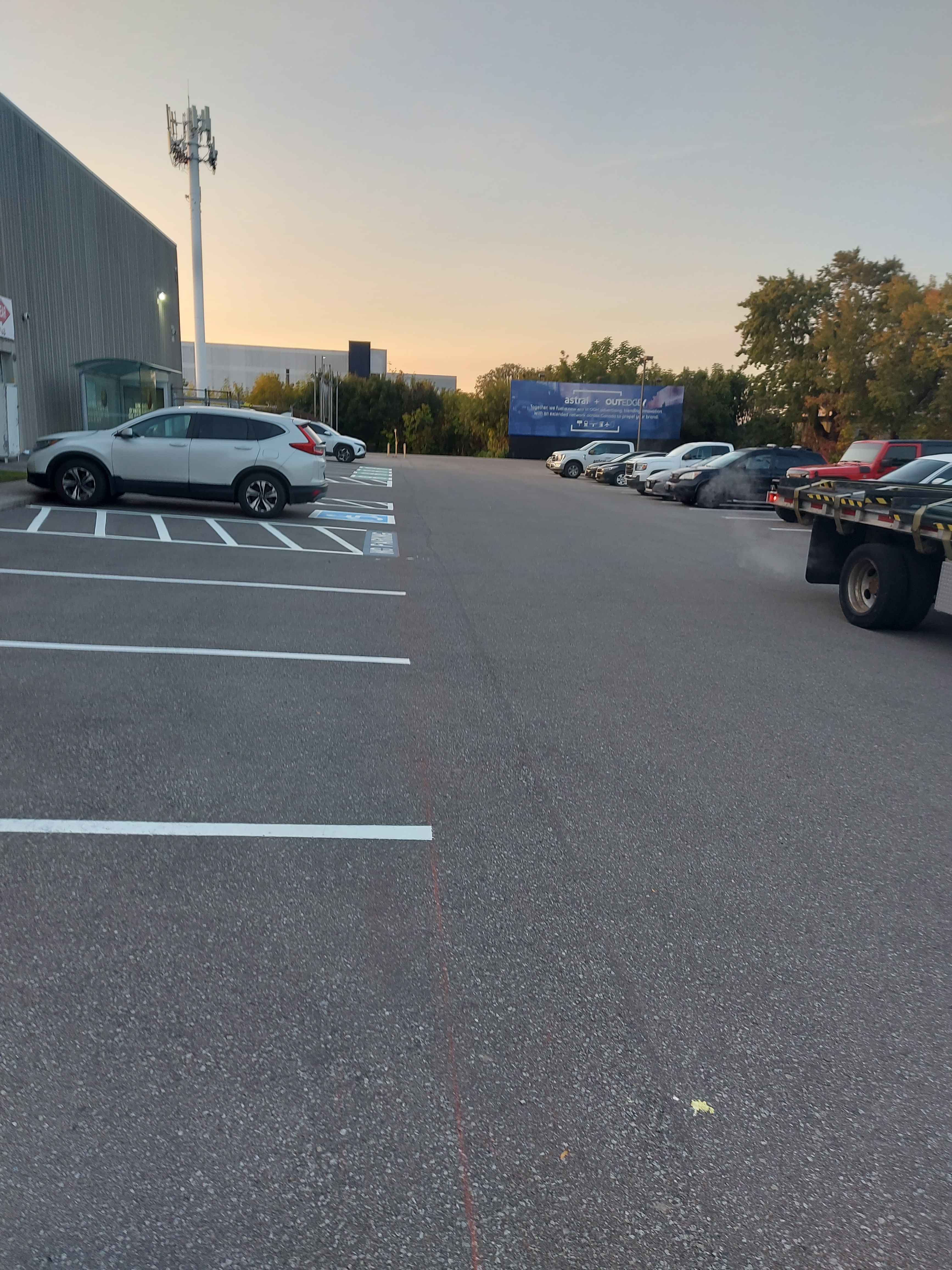
An accessible spot is incomplete without the accompanying access aisle. This is the striped area adjacent to the parking stall that allows for the deployment of ramps and lifts. When performing line marking, the width of this aisle must strictly adhere to local standards to ensure enough clearance for mobility devices.
3. Color Contrast and Visibility
The contrast between the symbol and the asphalt is what makes it functional. Typically, a blue background with a white symbol provides the highest level of visibility. Capital Parking Lot Line Painting recommends using professional-grade materials that resist fading from UV exposure and heavy traffic.
Common Mistakes to Avoid
Even experienced facility managers can make errors when overseeing line painting projects. To ensure your lot remains compliant and functional, avoid these common pitfalls:
- Inadequate Aisle Width: Making the access aisle too narrow prevents wheelchairs from maneuvering safely.
- Faded Markings: Using low-quality paint that wears away quickly, leading to non-compliance.
- Improper Placement: Centering the symbol in a way that obscures the actual parking boundary.
- Lack of Curb Alignment: Failing to ensure the symbol aligns with the curb or sidewalk access points.
- Ignoring Slope: Placing symbols on a slope that exceeds safe limits for mobility devices.
Professional Implementation Strategies
When it comes to large-scale projects, especially in a growing municipality like Ajax, precision is non-negotiable. A professional approach to line marking involves a multi-step process to ensure longevity and legality.
First, a site assessment must be conducted to determine the optimal placement based on the proximity to building entrances. Second, the surface must be cleaned thoroughly; any debris or oil residue will prevent the paint from adhering, leading to premature peeling. Finally, the application of the symbol and the surrounding line painting must be done with mathematical accuracy to meet regulatory standards.
By partnering with experts like Capital Parking Lot Line Painting, you ensure that your investment is protected and your facility remains accessible to all visitors.
Ready for a Refresh?
Don't wait for a compliance audit to realize your parking lot is outdated. High-visibility, properly integrated accessible symbols improve safety and demonstrate your commitment to inclusivity.