How to Plan Your Parking Lot Pavement Marking for EV and Future Needs
The landscape of transportation is shifting rapidly. As electric vehicles (EVs) become a staple on the roads of Windsor and across Ontario, commercial property owners must rethink how they utilize their asphalt real estate.
The Rise of the Electric Vehicle
For decades, parking lot design remained relatively static. You needed standard stalls, accessible spaces, and clear directional arrows. However, the integration of charging infrastructure has introduced a new layer of complexity to pavement management. It is no longer enough to simply mark a space; you must now consider the placement of power conduits, the width of charging cables, and the specific visibility requirements for specialized stalls.
At Capital Parking Lot Line Painting, we have observed a significant increase in requests for specialized layouts that accommodate these new technologies. Planning ahead ensures that your transition to EV support is seamless and does not require disruptive re-painting every few years.
Strategic Planning for EV Charging Stalls
When planning your next round of line marking, you cannot treat an EV stall like a standard parking spot. There are several unique factors to consider to ensure driver satisfaction and operational efficiency.
1. Increased Stall Width and Clearance
EV drivers often need extra room to maneuver heavy charging cables or to access ports located on the side or front of the vehicle. When executing your line marking, consider widening these specific stalls slightly to prevent drivers from accidentally encroaching on adjacent spaces while plugging in.
2. High-Visibility Identification
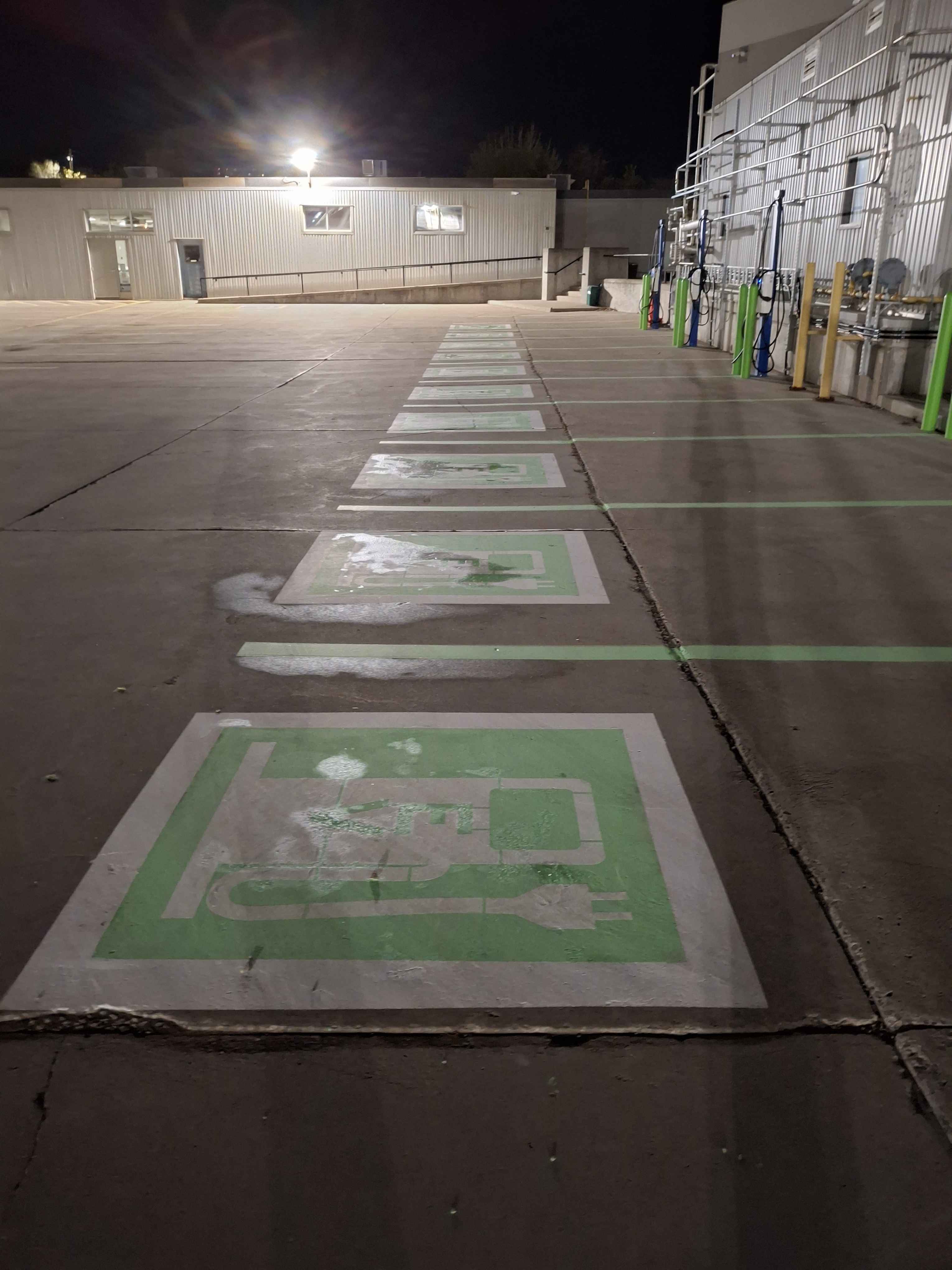
It is vital that EV-only spaces are immediately identifiable. This goes beyond standard white lines. Using distinct colors or adding specific symbols (such as a lightning bolt or EV icon) within the stall helps prevent non-electric vehicles from occupying these high-demand spots. Capital Parking Lot Line Painting specializes in high-durability pigments that ensure these symbols remain visible even under heavy traffic and varying weather conditions.
3. Integration with Infrastructure
The line marking must align perfectly with the physical charging pedestals. If the lines are painted too close to the equipment, it creates a tripping hazard or makes it difficult for vehicles to park squarely. Coordination between your electrical contractor and your line marking professional is essential.
Future-Proofing Your Asset
Don't wait until your lot is outdated. Proactive planning allows you to integrate new technology without tearing up your entire parking facility.
Common Mistakes to Avoid in Modern Line Marking
As a top 30 city in Ontario, Windsor is seeing rapid urban development. Property owners in the region are often rushing to meet new environmental standards, which can lead to avoidable errors. Avoid these common pitfalls:
- Ignoring Accessibility Laws: Ensuring EV stalls are also compliant with AODA (Accessibility for Ontarians with Disabilities Act) requirements is critical.
- Using Low-Quality Paint: Cheap materials fade quickly under UV exposure, leading to confusion and loss of stall control.
- Lack of Directional Flow: Failing to update arrows and pedestrian walkways to accommodate new traffic patterns around charging islands.
- Inconsistent Branding: Not matching the aesthetic of your facility with the precision of your line marking.
The Importance of Professional Execution
While it might be tempting to treat line marking as a minor maintenance task, it is actually a core component of your property's safety and functionality. Precision is everything. A line that is slightly crooked or a symbol that is poorly rendered can lead to parking disputes and inefficient use of space.
When you partner with Capital Parking Lot Line Painting, you are investing in precision. We understand the specific needs of commercial properties in Windsor, ensuring that your pavement markings are not only beautiful but also durable and compliant with all local regulations. Whether you are adding a single charging station or redesigning an entire lot to meet future energy standards, professional line marking is the foundation of a successful facility.
Conclusion: Looking Toward the Future
The transition to electric mobility is not a matter of 'if,' but 'when.' By incorporating EV-ready designs into your current line marking projects, you save time, reduce long-term costs, and provide a superior experience for your customers and tenants. Stay ahead of the curve by planning your pavement markings with the next decade in mind.