Is Sealcoating Suitable for Older Asphalt Surfaces?
As asphalt ages, it undergoes a visible transformation, shifting from a deep, rich black to a faded, light grey. For property owners in Kitchener, this change often raises a critical question: Is it still worth sealcoating, or has the damage gone too far?
Understanding the Aging Process of Asphalt
Asphalt is a flexible pavement material, but it is not invincible. Over time, exposure to UV rays, water penetration, and the harsh seasonal shifts common in Ontario cause the bitumen (the "glue" that holds the rocks together) to oxidize. As the bitumen dries out, the surface becomes brittle and loses its ability to repel water.
When we talk about "older" asphalt, we are generally referring to surfaces that have moved past the stage of simple discoloration and have begun showing signs of structural fatigue. At Capital Parking Lot Line Painting, we often see property managers struggling to decide if a simple protective coating will suffice or if more intensive measures are required.
When Sealcoating is the Right Choice
Sealcoating is a preventative maintenance tool. It is designed to create a barrier against moisture and oxidation. For older surfaces, sealcoating is suitable if the following conditions are met:
- The surface is primarily faded in color but remains structurally sound.
- There are no large potholes or deep depressions.
- Cracks are "hairline" or superficial rather than deep structural fissures.
- The base layer of the pavement is still stable and hasn't shifted.
If your lot meets these criteria, a professional application can extend the life of your pavement by several years, acting as a "fountain of youth" for your driveway or parking area.
The Red Flags: When Sealcoating Isn't Enough
There is a misconception that sealcoating can "fix" a broken parking lot. This is a mistake that can lead to wasted resources. If your asphalt exhibits the following symptoms, you likely need repairs or a complete resurfacing rather than just a sealant:
1. Alligator Cracking
This pattern of interconnected cracks resembles the skin of an alligator. It is a sign of base failure. Sealcoating will simply sink into these cracks and provide no long-term protection.
2. Deep Potholes
Potholes indicate that water has penetrated the sub-base, causing the ground underneath to shift or erode. Sealcoating sits on top of the surface; it cannot fill or stabilize a void in the earth.
3. Severe Heaving or Subsidence
If sections of your asphalt are tilting or sinking unevenly, the structural integrity is compromised. Capital Parking Lot Line Painting recommends a professional assessment in these cases to prevent further liability issues.
Proper assessment is the key to long-term pavement success. Don't guess when it comes to your property's maintenance.
The Importance of a Combined Approach
For many commercial properties in Kitchener, the best approach is a hybrid one. This involves repairing the structural defects first—such as crack filling or pothole patching—and then applying the sealcoat over the entire surface. This ensures the sealant adheres to a stable foundation.
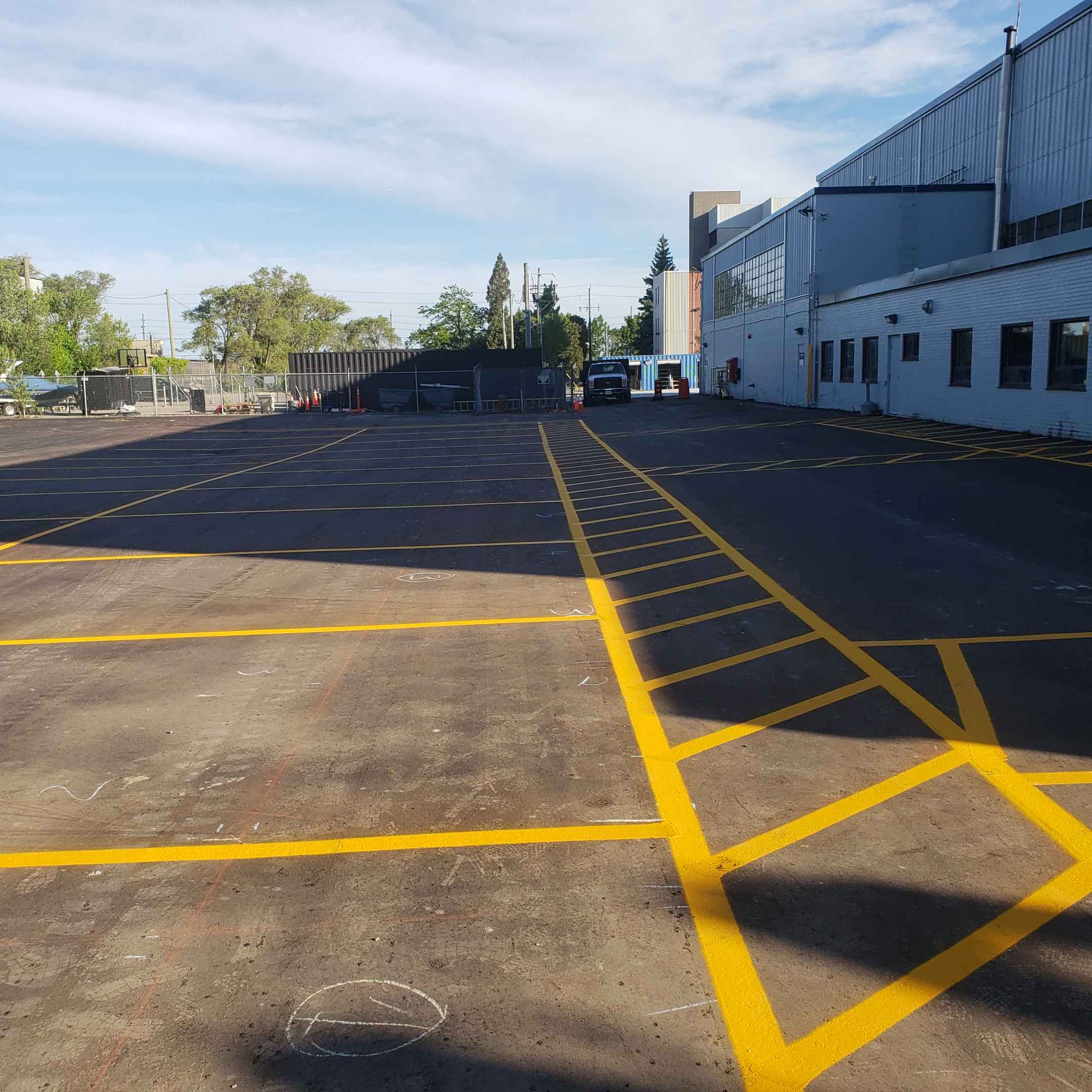
Once the surface is restored and sealed, the final touch for any professional lot is clear visibility. This is where Line Marking becomes essential. A freshly sealed, dark black surface provides the perfect high-contrast background for crisp, bright Line Painting, ensuring your parking lot is both safe and aesthetically pleasing.
By working with experts like Capital Parking Lot Line Painting, you ensure that your maintenance schedule is optimized for your specific asphalt age and condition.
Summary Checklist for Property Owners
Before booking your next maintenance appointment, run through this quick checklist:
- Visual Inspection: Are the cracks wide enough to fit a coin? (If yes, you need crack filling).
- Surface Texture: Is the asphalt crumbling or sandy? (If yes, you may need a more heavy-duty sealer).
- Drainage: Does water pool in certain areas? (If yes, sealcoating won't solve the underlying drainage issue).
- Aesthetics: Do you need to refresh your Line Marking to improve traffic flow?