How Sealcoating Helps Protect Against Oil and Gas Spills
Asphalt is the backbone of commercial properties, but it is far more vulnerable to chemical damage than most property owners realize. Understanding the protective power of sealcoating is essential for long-term pavement health.
The Silent Threat: Oil and Gas on Asphalt
For businesses in busy commercial hubs like Milton, vehicle traffic is constant. With every vehicle that enters a parking lot, there is a risk of fluid leaks. Oil, gasoline, diesel, and various hydraulic fluids are common occurrences in any high-traffic area. While a small drip might seem inconsequential, the chemical composition of these fluids is highly aggressive toward asphalt.
Asphalt is a petroleum-based product. When highly refined oils or gasoline come into contact with unsealed asphalt, they act as a solvent. This process, known as "de-bonding," dissolves the bitumen (the black glue that holds the aggregate together). Once the binder is compromised, the structural integrity of the pavement vanishes, leading to soft spots, crumbling, and eventually, deep potholes.
How Sealcoating Acts as a Chemical Barrier
This is where professional sealcoating becomes a critical investment. When Capital Parking Lot Line Painting applies a high-quality sealant, we are not just adding color to your pavement; we are applying a sacrificial protective layer. This layer serves as a shield between the harsh environmental elements and the sensitive asphalt binder.
Think of sealcoating like a raincoat for your parking lot. When an oil spill occurs on a sealed surface, the liquid sits on top of the sealant rather than immediately penetrating the pores of the asphalt. This provides property managers with a crucial window of time to clean up the spill before it can cause permanent structural damage.
Key Benefits of Sealcoating for Chemical Protection:
- Reduced Permeability: Sealants fill the microscopic pores in the asphalt, making it much harder for liquids to seep in.
- Chemical Resistance: Modern sealants are formulated to withstand mild chemical exposure, providing a buffer against petroleum products.
- Oxidation Prevention: Beyond spills, sealcoating protects against UV rays, which otherwise make asphalt brittle and prone to cracking.
- Surface Smoothness: A sealed surface is easier to clean, making the removal of oil spills much more effective.
The Relationship Between Sealcoating and Line Marking
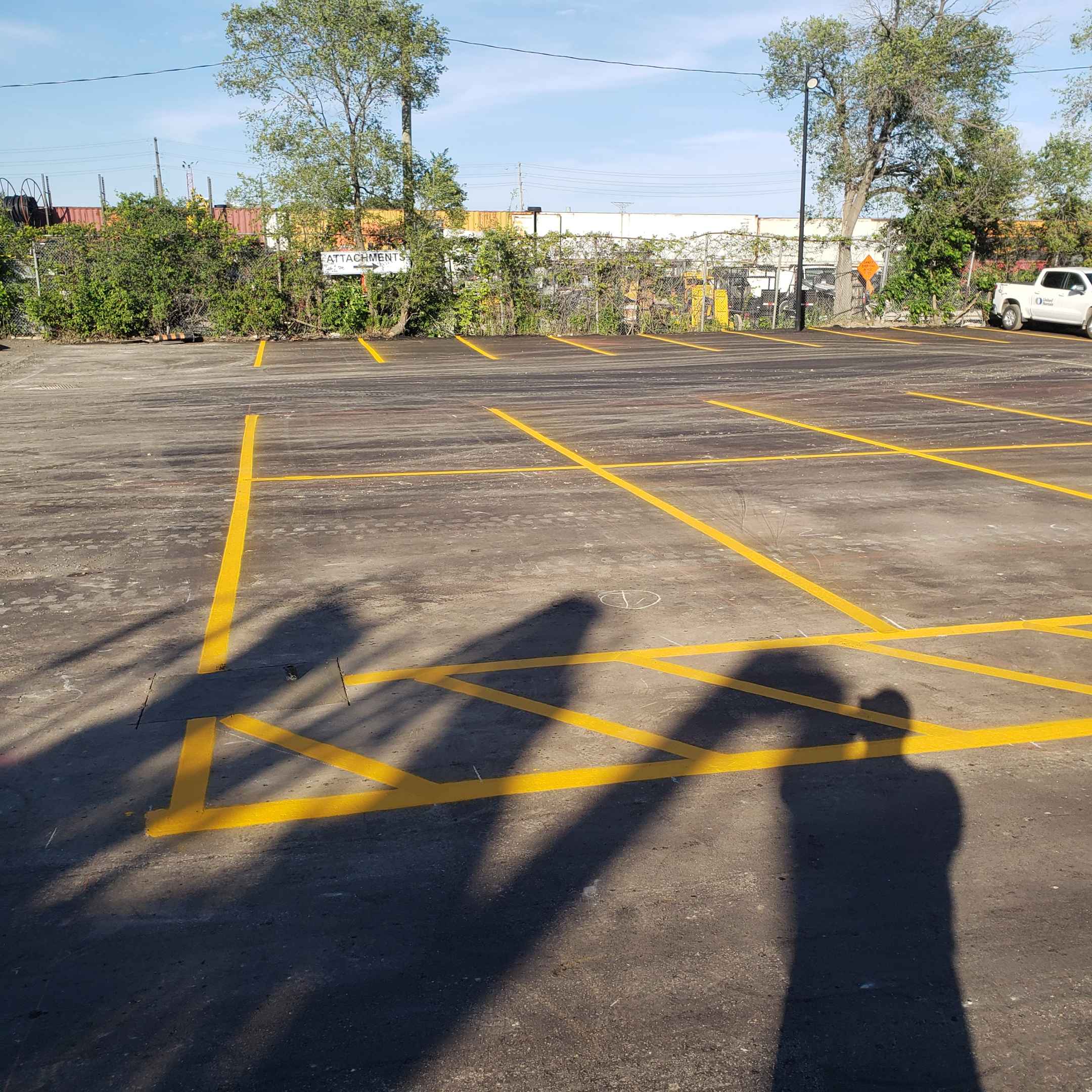
A well-maintained parking lot is not just about the black surface; it is about the clarity of the entire environment. At Capital Parking Lot Line Painting, we often recommend coordinating sealcoating with fresh Line Marking or Line Painting.
When you apply a new sealcoat, the surface becomes dark, uniform, and clean. Applying fresh Line Painting over a freshly sealed surface ensures maximum visibility and longevity. The contrast between the deep black sealant and the bright, crisp lines creates a professional appearance that signals to customers in Milton that your property is well-managed and safe.
Common Mistakes in Asphalt Maintenance
Many property owners wait until they see visible damage before calling in the experts. By then, the oil has likely already reached the aggregate. To maintain a pristine lot, avoid these common pitfalls:
Neglecting Regular Inspections
Small oil stains can quickly turn into large cracks if left untreated.
DIY Sealcoating
Using low-quality, store-bought sealants often fails to provide the necessary chemical barrier.
Visualizing the Difference
Professional Sealcoating Application
Conclusion: Protect Your Investment
The cost of replacing an entire asphalt parking lot far exceeds the cost of routine maintenance. By implementing a regular sealcoating schedule, you are creating a robust defense against the inevitable oil and gas spills that occur in commercial settings.
Whether you need comprehensive sealcoating or precision Line Marking, Capital Parking Lot Line Painting is here to help. We provide the expertise required to keep your surfaces durable, safe, and looking their absolute best for years to come.