How Water and Salt Damage Asphalt Through Cracks
Understanding the silent killers of your pavement: Moisture and Sodium Chloride.
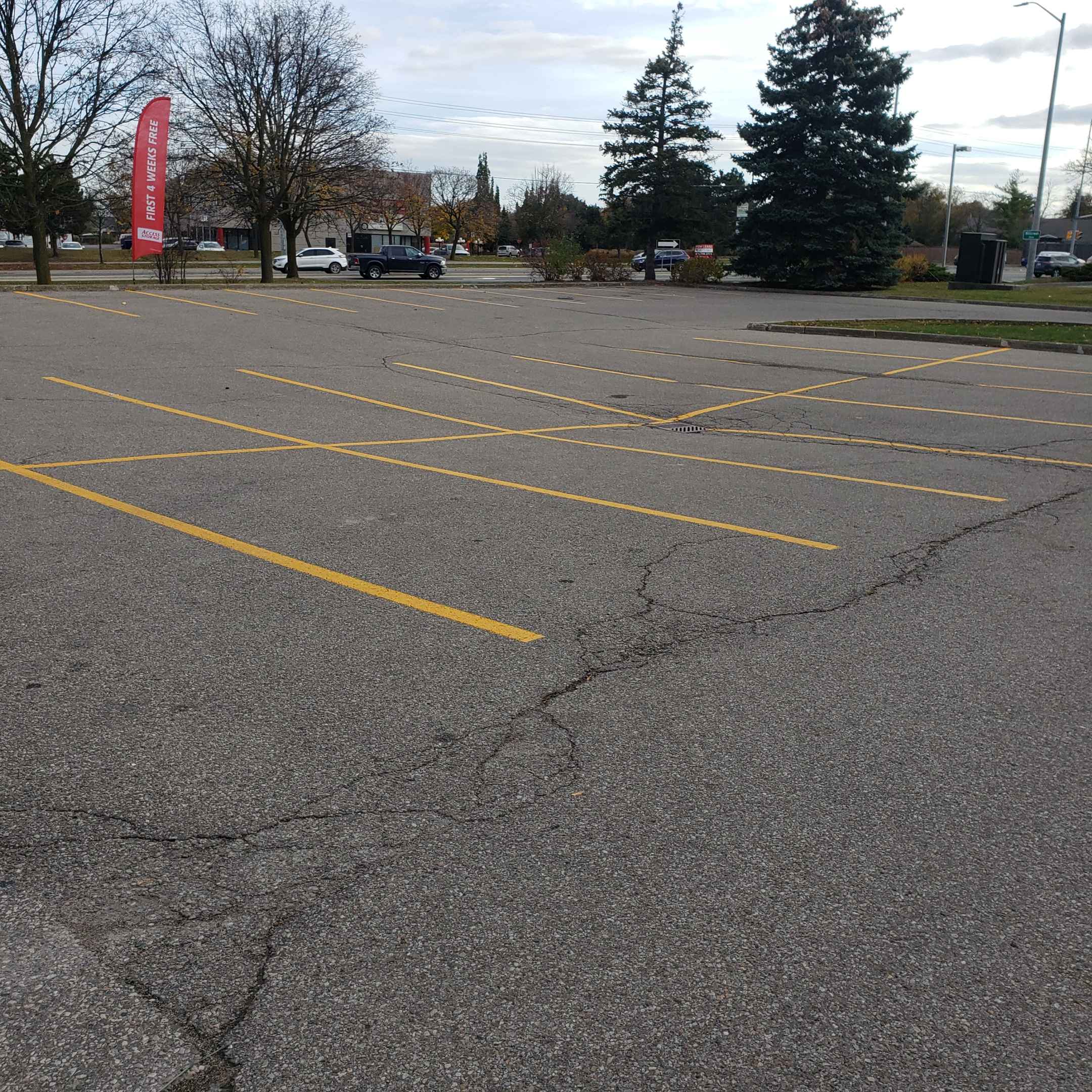
To the untrained eye, a small crack in a parking lot might seem like a minor cosmetic issue. However, for property owners in Oshawa, these tiny fissures are the entry points for a destructive cycle that can compromise the entire structural integrity of your pavement. When you combine the seasonal freeze-thaw cycles of Ontario with the heavy use of de-icing salts, the result is a rapid deterioration that can turn a manageable repair into a complete reconstruction project.
At Capital Parking Lot Line Painting, we see firsthand how neglect allows these elements to wreak havoc. Understanding the science behind this damage is the first step in effective pavement management.
The Role of Water: The Freeze-Thaw Cycle
Water is perhaps the most persistent enemy of asphalt. Asphalt is a semi-flexible material, but it is not waterproof. When cracks form due to age, heavy loads, or UV exposure, water begins to seep into the sub-base of the pavement.
The Expansion Power of Ice
In a city like Oshawa, where winter temperatures frequently dip below freezing, the freeze-thaw cycle is relentless. When water enters a crack and freezes, it expands by approximately 9% in volume. This expansion exerts immense upward pressure on the asphalt surface, widening the existing crack and creating new ones. This process, known as frost heaving, weakens the bond between the asphalt layers and the underlying aggregate.
Sub-base Erosion
Once water penetrates deep enough to reach the sub-base, the damage becomes structural. Moving water can wash away the fine particles that support the heavy stone base. As the foundation becomes hollowed out or unstable, the asphalt above it begins to sink, leading to potholes and alligator cracking.
How Salt Accelerates the Destruction
While water provides the physical force, road salt (sodium chloride) provides the chemical catalyst. Salt is used extensively in Ontario to make roads safer, but it is incredibly harsh on asphalt surfaces.
- Increased Porosity: Salt can chemically react with the binders in the asphalt, making the surface more porous and prone to absorbing even more water.
- Accelerated Oxidation: The chemical composition of certain salts can speed up the oxidation process, causing the asphalt to become brittle and lose its flexibility.
- Thermal Shock: The application of salt on frozen surfaces can cause rapid temperature shifts in the pavement, contributing to further micro-cracking.
- Structural Weakening: As salt-laden water penetrates the sub-base, it can affect the soil composition, leading to uneven settling.
The Domino Effect of Neglect
The damage caused by water and salt rarely stays localized. It follows a predictable, destructive pattern:
- Micro-cracking: Small cracks appear due to UV rays and aging.
- Water Infiltration: Rain and melting snow enter these cracks.
- Salt Penetration: De-icing agents enter the cracks, carrying moisture deeper.
- Expansion: Freezing temperatures expand the water, widening the cracks.
- Structural Failure: The sub-base collapses, resulting in potholes and total pavement failure.
To prevent this, regular maintenance is required. This includes crack sealing and ensuring that your Line Marking is clearly visible to guide traffic away from damaged areas. Capital Parking Lot Line Painting recommends inspecting your lot annually to catch these issues before they become catastrophic.
Preventative Measures and Maintenance
You don't have to wait for a pothole to appear before taking action. Proactive care can save thousands in long-term repairs. Here is what you should focus on:
Crack Sealing
Filling cracks with high-quality rubberized sealant prevents water from reaching the sub-base, effectively "waterproofing" your lot.
Sealcoating
A fresh sealcoat provides a protective barrier against UV rays and salt, slowing down the oxidation process.
Additionally, maintaining clear Line Painting helps ensure vehicles stay within designated lanes, reducing the physical stress placed on the edges of the asphalt where cracks often begin.
When you are ready to revitalize your property, Capital Parking Lot Line Painting is here to provide professional solutions that protect your investment.
Quick Summary
Water and salt work together to destroy asphalt. Water expands when frozen, while salt weakens the chemical bonds and increases moisture absorption. Regular crack sealing and professional maintenance are your best defenses against the harsh Ontario climate.