Is Sealcoating Suitable for Older Asphalt Surfaces?
Understanding the fine line between preventative maintenance and structural necessity for aging pavement.
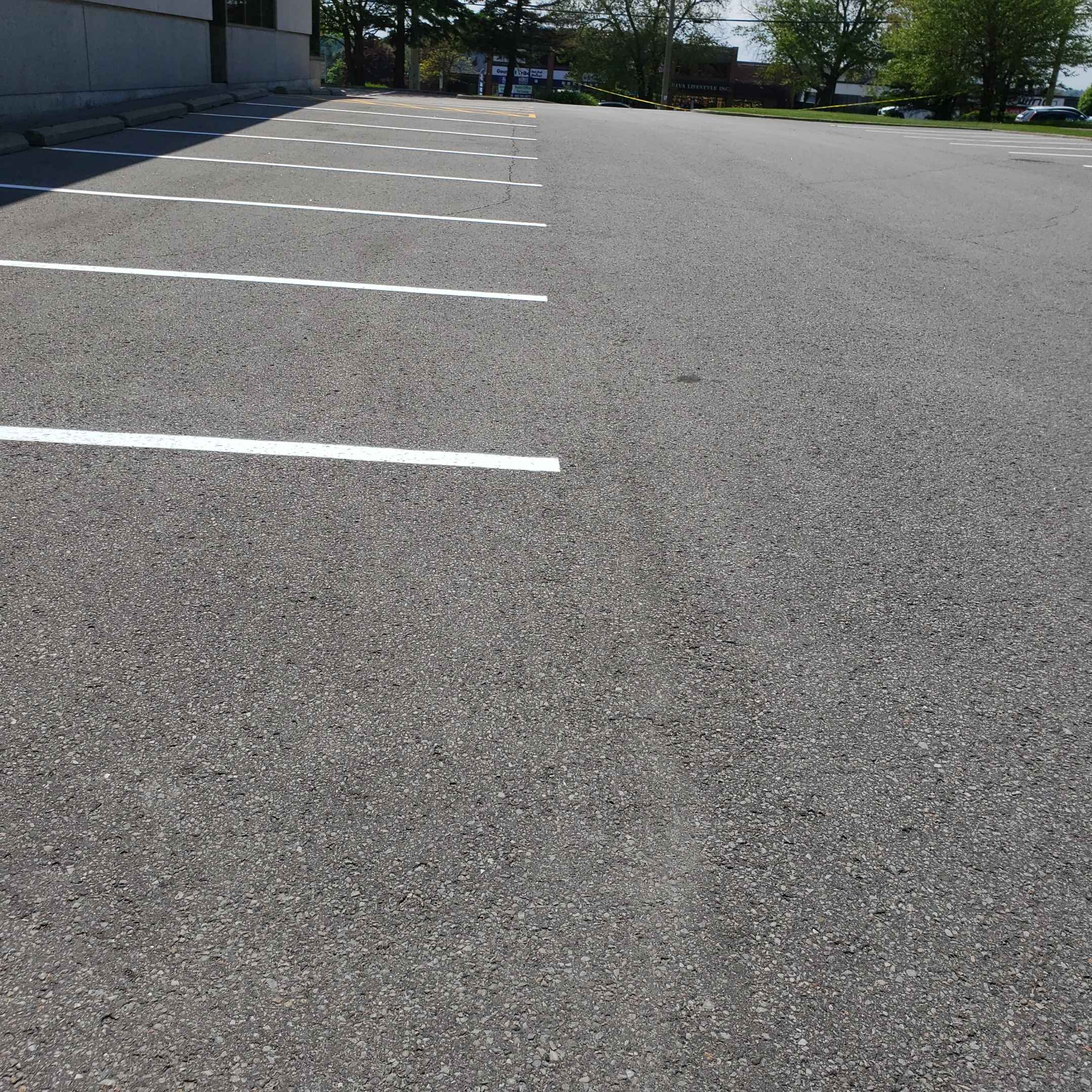
As asphalt ages, it undergoes a visible transformation. What was once a deep, jet-black surface begins to fade into a light grey, eventually showing signs of wear like small cracks or raveling. For property owners in Sarnia, managing these changes is critical to maintaining curb appeal and safety. One of the most frequent questions we receive at Capital Parking Lot Line Painting is: "Can I still sealcoat my asphalt if it's already old?"
The short answer is: It depends on the condition of the surface. Sealcoating is a fantastic preventative measure, but when applied to surfaces that have already suffered significant structural degradation, it can sometimes act as a temporary cosmetic fix rather than a long-term solution. In this guide, we will dive deep into the nuances of asphalt aging and how to determine the best path forward for your property.
The Role of Sealcoating in Asphalt Longevity
Sealcoating is essentially a protective layer applied to the surface of your asphalt. Think of it like sunscreen for your pavement. It protects the bitumen (the "glue" that holds the rocks together) from the harsh UV rays, water penetration, and chemical spills that occur daily.
For newer asphalt, sealcoating is highly effective at locking in moisture and preventing the oxidation process that leads to grey discoloration. However, as we move into the realm of older surfaces, the goals of sealcoating shift from prevention to preservation.
When Sealcoating is the Right Choice
Even if your asphalt is older, sealcoating may still be a viable option if the surface is structurally sound. If your pavement shows signs of aging but lacks major structural failures, a professional application can breathe new life into the lot. You should consider sealcoating if you observe the following:
- Minor Surface Discoloration: The asphalt has turned grey but remains smooth.
- Hairline Cracks: Small, superficial cracks that haven't yet widened into deep fissures.
- Surface Raveling: Very slight loss of aggregate on the very top layer.
- General Wear: The surface looks tired but is still level and free of large potholes.
At Capital Parking Lot Line Painting, we always recommend a thorough inspection before applying any sealant to ensure we aren't simply "painting over" a much larger problem.
When Sealcoating Isn't Enough
There comes a point where sealcoating becomes a wasted investment. If the underlying base of your asphalt has shifted or failed, applying a sealant will not fix the issue. In fact, sealing over major cracks can sometimes trap water underneath, accelerating the damage during the freeze-thaw cycles common in Sarnia.
Red Flags to Watch For:
If you notice any of the following, you likely need repairs or a full resurfacing rather than just a coat of sealant:
- Alligator Cracking: A pattern of interconnected cracks that looks like reptile skin. This indicates a failure in the base layer.
- Potholes: Deep depressions where the asphalt has completely broken away.
- Depressions and Rutting: Areas where the pavement has sunk or shows grooves from vehicle tires.
- Wide Fissures: Cracks that are wide enough to accommodate a coin or larger.
The Importance of Professional Line Marking
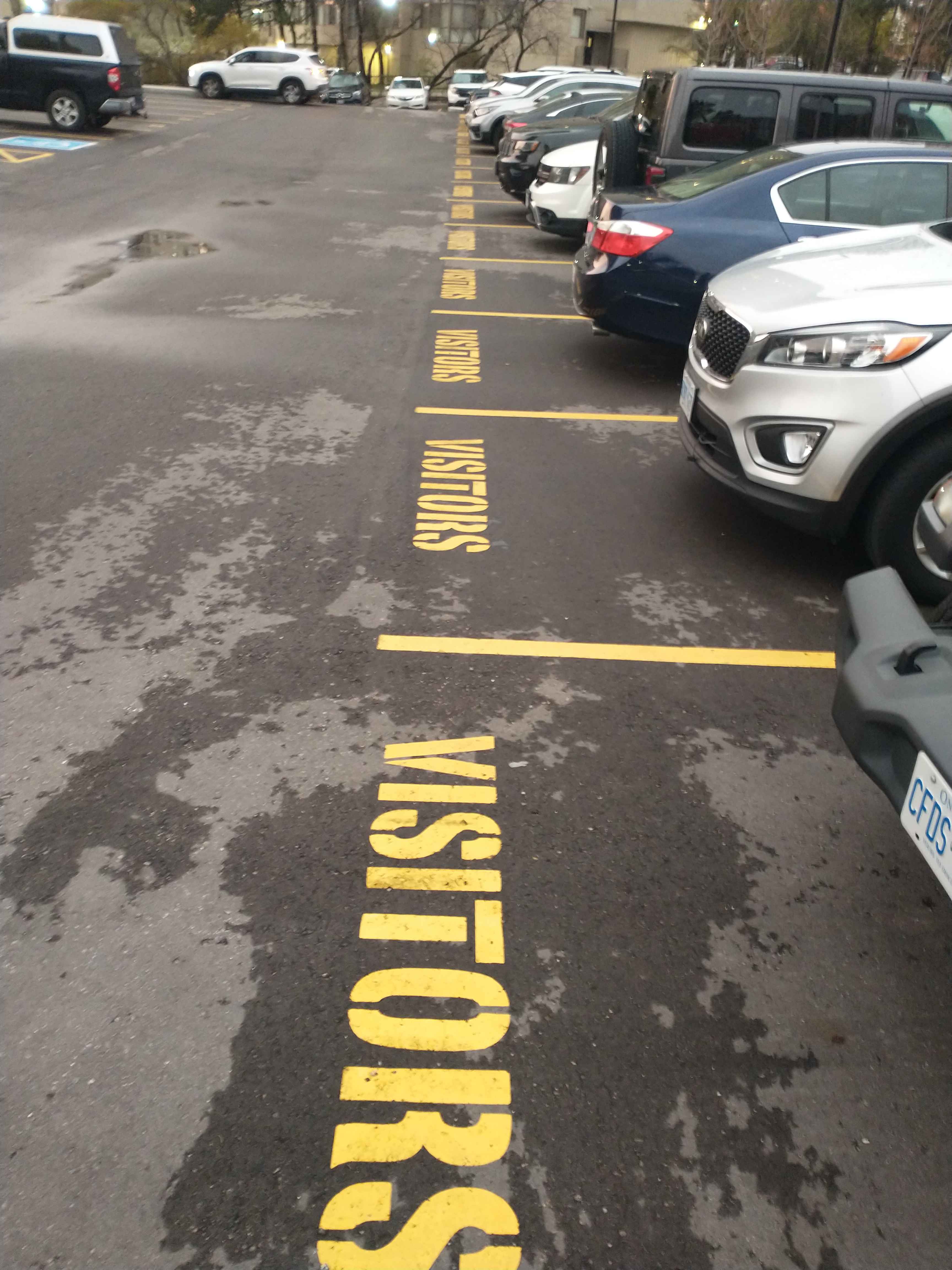
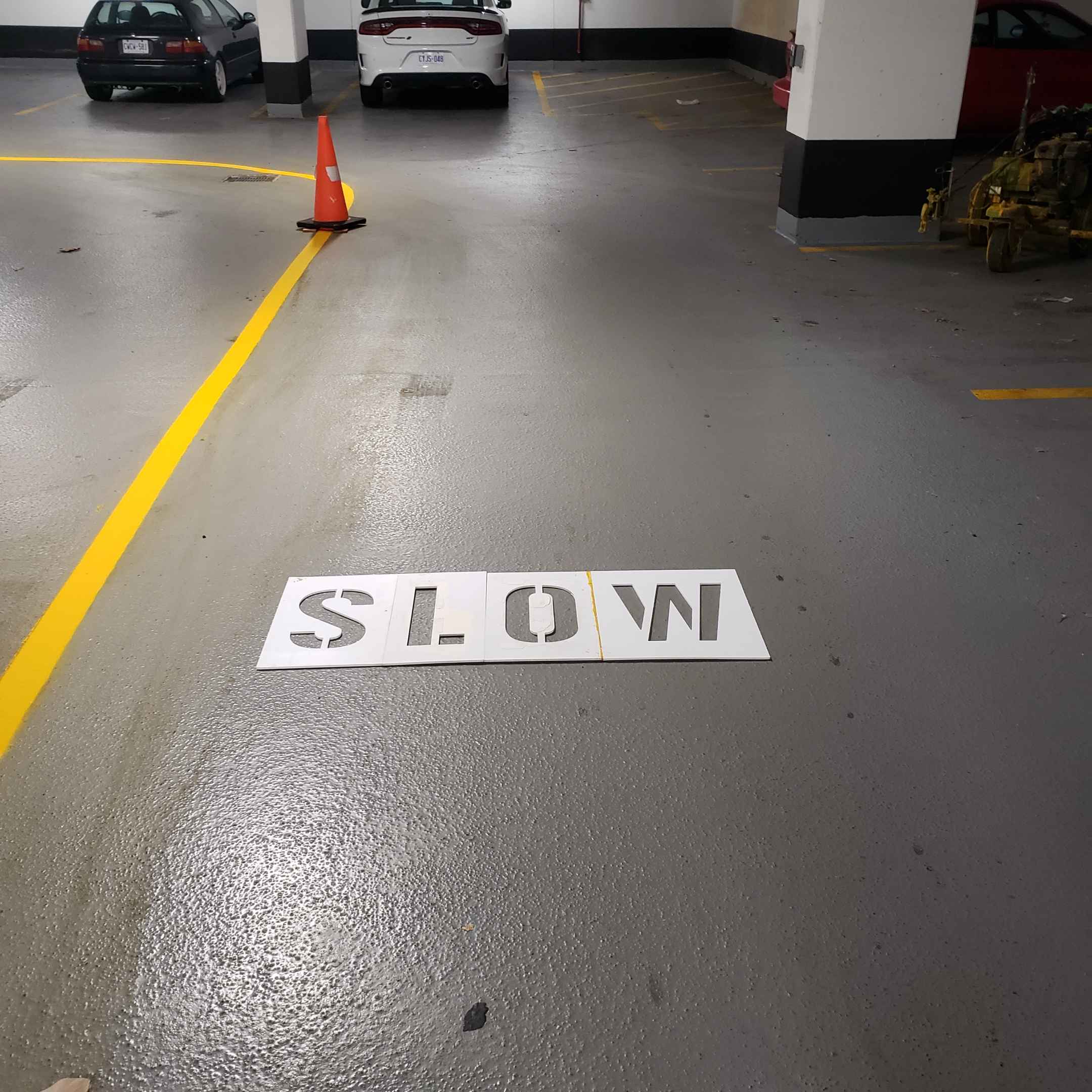
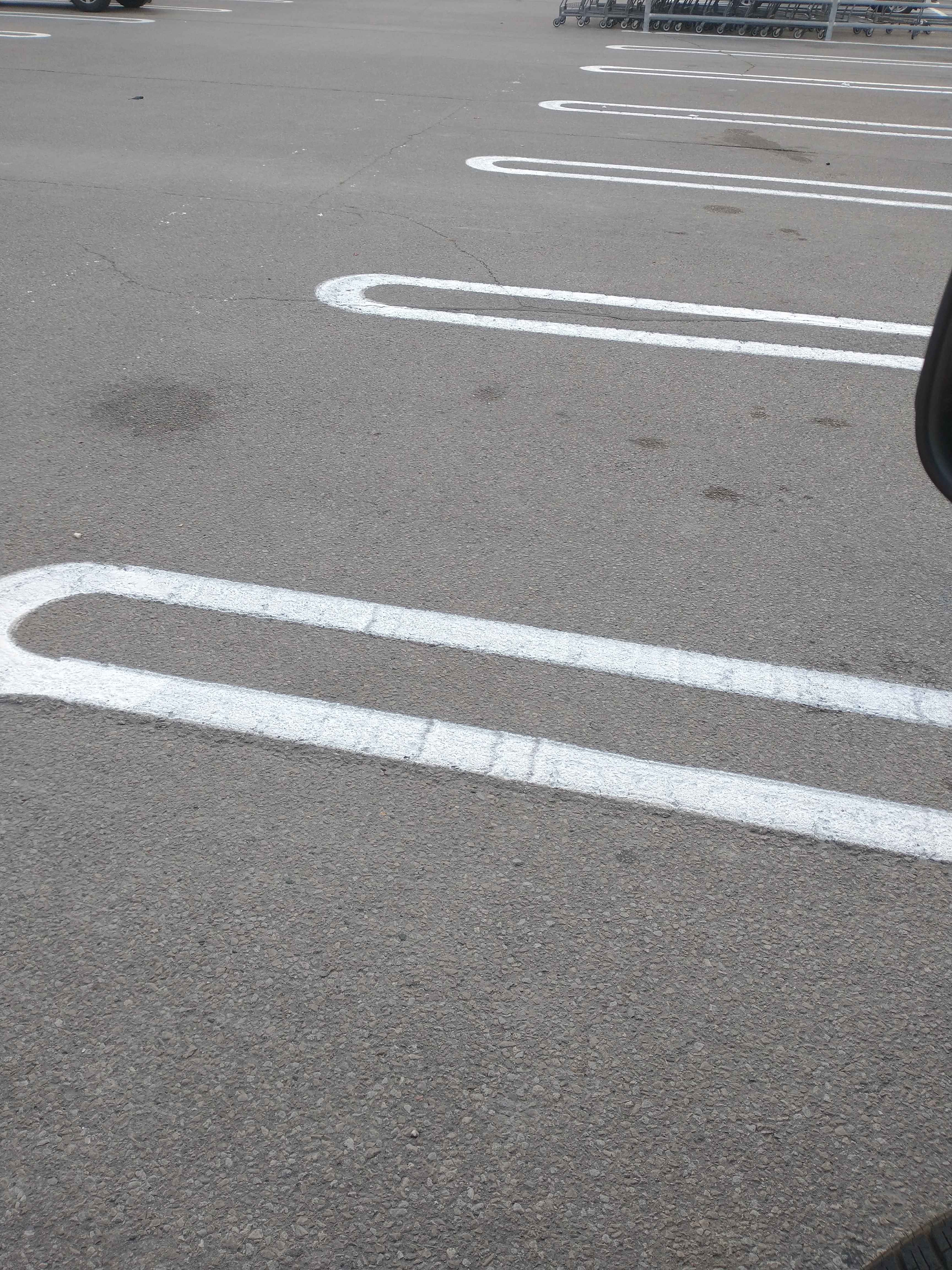
Once your asphalt surface has been restored or sealcoated, the next step in professional property management is visibility. A freshly sealed black surface provides the perfect high-contrast background for Line Marking.
Without clear, bright lines, your parking lot can become chaotic, leading to safety hazards and inefficient space utilization. Capital Parking Lot Line Painting specializes in ensuring that your parking stalls, handicap symbols, and directional arrows are crisp and highly visible, complementing your newly maintained surface.
Summary: The Maintenance Roadmap
To maximize the life of your investment, follow this general hierarchy of asphalt care:
- New Asphalt: Sealcoat every 2-3 years to prevent oxidation.
- Mid-Life Asphalt: Repair cracks first, then sealcoat to maintain integrity.
- Aging Asphalt: Perform heavy crack filling and pothole repair before considering sealcoating.
- Failing Asphalt: Opt for milling and overlay or full replacement.
Ready to Revitalize Your Surface?
Don't wait for your parking lot to become a liability. Whether you need expert sealcoating advice or precision Line Painting, our team is here to help you make informed decisions for your property.