How to Design Parking Lot Layouts That Maximize Capacity
Unlock the full potential of your asphalt real estate with strategic design and precision marking.

Every square inch of a commercial parking lot represents potential revenue and customer convenience. For business owners in fast-growing areas like Markham, a poorly designed lot isn't just an eyesore—it is a bottleneck that drives customers away. Maximizing capacity is not simply about cramming more cars into a space; it is about the delicate balance of geometry, safety regulations, and efficient traffic flow.
To achieve true optimization, you must look beyond the surface. While the physical layout is the foundation, the clarity of your line marking determines how effectively that layout is utilized. This is where professional expertise from Capital Parking Lot Line Painting becomes an invaluable asset in your property management toolkit.
1. Choosing the Right Parking Angle
The angle of your parking stalls is perhaps the most critical decision in the design phase. The angle dictates how much space is required for drive aisles and how easily vehicles can enter and exit their spots.
90-Degree Parking
Standard perpendicular parking is the most common choice for maximizing density. It allows for the highest number of stalls per linear foot. However, it requires wider drive aisles to allow vehicles to make the sharp turn into the stall. This is ideal for large, open lots where space is abundant but vehicle count is high.
Angled Parking (30, 45, or 60 Degrees)
Angled parking is often more user-friendly. It allows for narrower drive aisles, which can actually save space in long, narrow lots. While you might fit fewer cars in a single row compared to 90-degree parking, the increased ease of movement can prevent congestion. For many properties in Markham, angled parking provides a premium feel and smoother traffic patterns.
2. Optimizing Drive Aisles and Traffic Flow
A parking lot that is "full" but impossible to navigate is a failure. Efficient design ensures that drivers can find a spot, enter it, and exit without causing a backup. This requires careful calculation of aisle widths based on the type of parking selected.
When planning your layout, consider the following elements to ensure maximum efficiency:
- One-Way vs. Two-Way Aisles: One-way aisles are often more space-efficient when paired with angled parking.
- Turning Radii: Ensure corners are wide enough for larger vehicles to turn without mounting curbs.
- Pedestrian Safety: Designate clear walking paths to separate foot traffic from moving vehicles.
- Entrance/Exit Placement: Avoid placing exits too close to high-traffic intersections to prevent queuing.
3. The Role of Precision Line Marking
You can have the most mathematically perfect layout in the world, but if the lines are faded, crooked, or inconsistent, your capacity will suffer. Drivers tend to hesitate or park haphazardly when markings are unclear, leading to wasted space and accidental collisions.
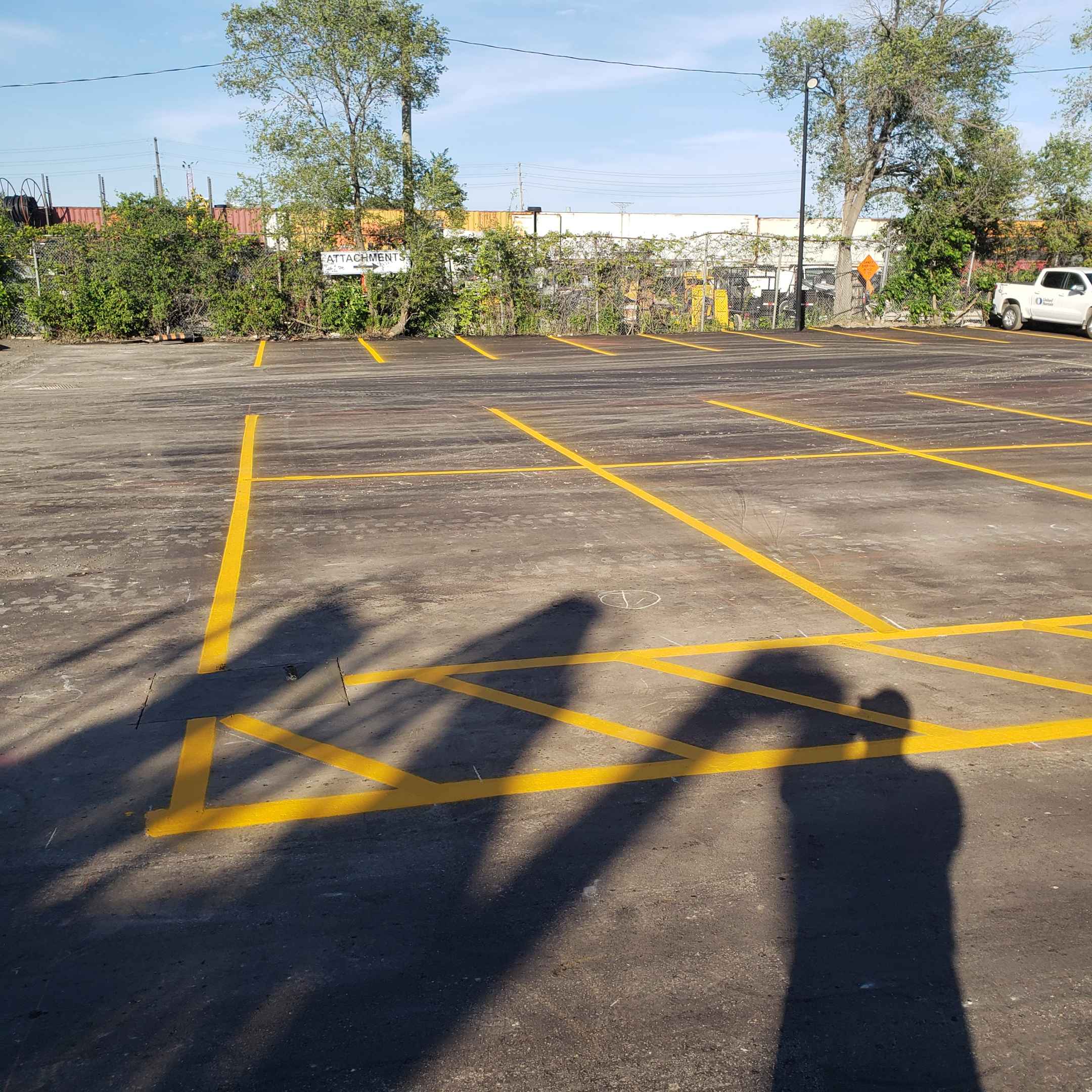
High-quality line marking ensures that every driver knows exactly where their boundaries are. At Capital Parking Lot Line Painting, we emphasize that precision is key to maintaining the integrity of your design. Crisp, bright lines encourage drivers to park centered within their stalls, preventing the "staggered parking" phenomenon that effectively kills your lot's capacity.
Expert Solutions for Your Property
Don't let a disorganized lot hinder your business growth. Whether you are designing a new facility or refreshing an existing one, Capital Parking Lot Line Painting provides the professional touch needed to maximize your space and safety.
Common Design Mistakes to Avoid
To ensure your investment pays off, avoid these frequent errors in parking lot management:
- Ignoring ADA/Accessibility Requirements: Failing to include properly sized accessible stalls can lead to legal issues and reduced usability.
- Overlooking Drainage: A layout that creates "puddling" zones will deteriorate quickly and frustrate users.
- Neglecting Maintenance: Faded line painting is a sign of neglect that can decrease the perceived value of your property.
- Inadequate Lighting: Capacity is irrelevant if customers feel unsafe using the lot after dark.
Conclusion
Maximizing parking capacity is a multi-faceted challenge that requires a blend of engineering logic and aesthetic precision. By selecting the right angles, optimizing your aisles, and investing in professional line marking, you can transform a cramped lot into a high-performance asset. If you are looking to optimize your property in Markham or the surrounding areas, remember that the details make the difference.