How to Design Parking Lot Layouts That Maximize Capacity
Optimizing every square foot of your asphalt to ensure seamless traffic flow and maximum vehicle density.
For commercial property owners and developers, the parking lot is more than just a slab of asphalt; it is the first impression of a business and a critical component of operational efficiency. Whether you are managing a retail complex in a bustling area or a corporate office in Burlington, the way you utilize your parking space directly impacts customer satisfaction and revenue potential.
Maximizing capacity isn't just about cramming more cars into a space. It is about the delicate balance between density, safety, and accessibility. A poorly designed lot might hold more cars but could result in gridlock, accidents, or frustrated drivers who cannot find a way out. This is where professional planning and precise line marking come into play.
Key Principles of High-Efficiency Parking Design
To achieve the highest possible capacity without sacrificing safety, designers must consider several geometric and logistical factors.
1. Angle of Parking: 90-Degree vs. Angled Stalls
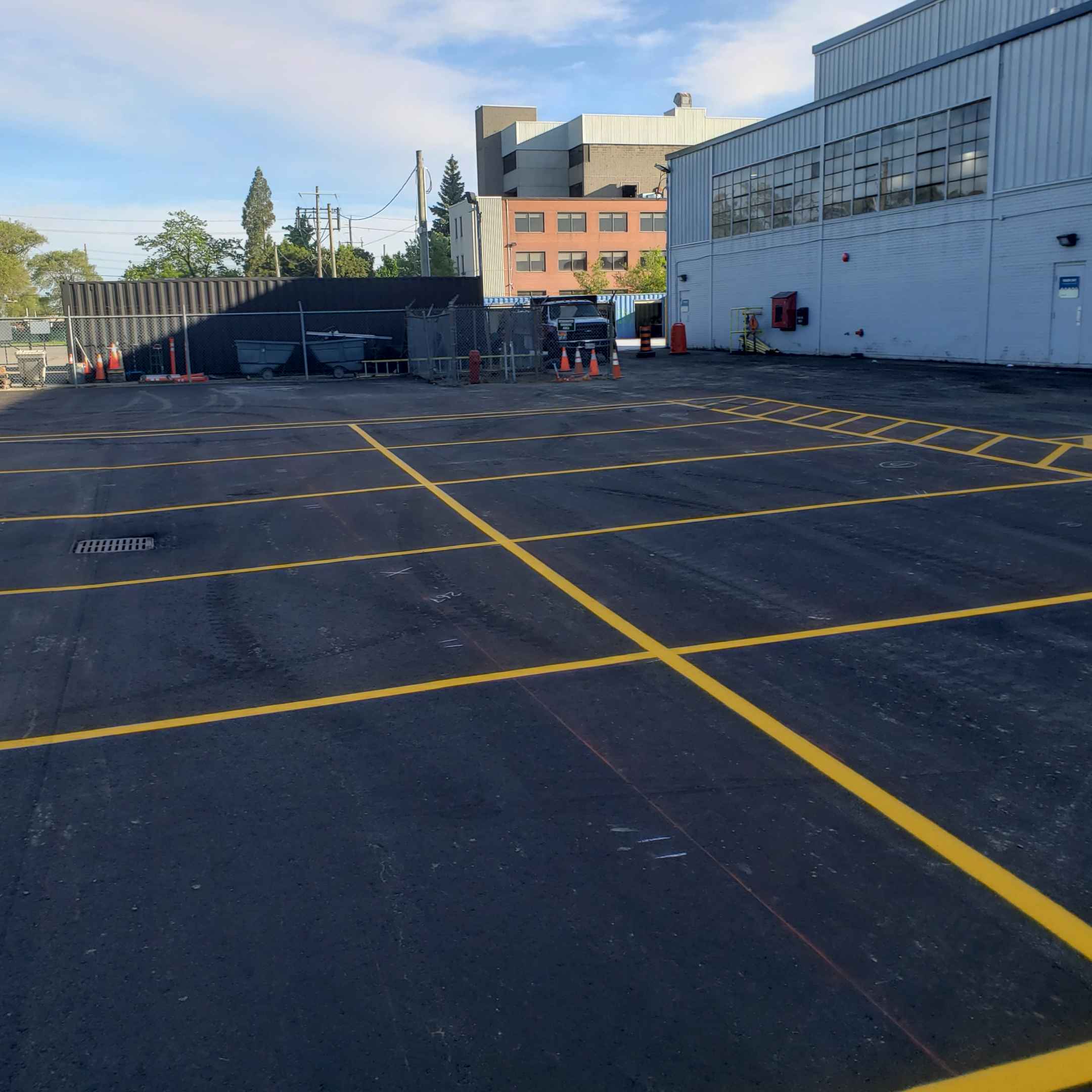
One of the most significant decisions in layout design is the angle of the stalls. 90-degree parking is the gold standard for maximizing the number of vehicles in a rectangular area. However, it requires wider drive aisles to allow for the turning radius of vehicles. On the other hand, angled parking (such as 45 or 60 degrees) allows for narrower aisles, which can sometimes allow for more rows in a constrained space, though it often results in fewer total stalls per row.
2. Drive Aisle Width and Traffic Flow
A common mistake is narrowing aisles too much to gain extra stalls. If a driver cannot navigate the aisle comfortably, the lot becomes unusable during peak hours. At Capital Parking Lot Line Painting, we emphasize that clear, well-defined aisles are just as important as the stalls themselves. Effective flow prevents the "bottleneck effect" that plagues many high-density lots.
3. ADA Compliance and Accessibility
In any top-tier city like Burlington, adhering to accessibility standards is non-negotiable. Designing layouts that integrate handicap-accessible stalls near entrances without disrupting the overall flow is a hallmark of a well-engineered lot. These spaces must be clearly demarcated with high-visibility line painting to ensure they are used correctly.
Common Mistakes to Avoid
Even experienced developers can fall into traps that diminish the utility of their parking facilities. Avoid these frequent errors:
- Ignoring Turning Radii: Failing to account for larger vehicles (SUVs and trucks) can lead to curb damage and stall encroachment.
- Inconsistent Line Widths: Poorly executed line marking can make stalls appear larger or smaller than they are, leading to driver confusion.
- Neglecting Pedestrian Safety: Forgetting designated walking paths can force pedestrians into the path of moving vehicles.
- Overlooking Drainage: A layout that ignores the slope of the land can lead to pooling water, which destroys the asphalt and the markings.
The Role of Professional Line Marking
Once the layout is designed, the execution of the markings is what brings the design to life. Precise line painting is the difference between a chaotic lot and a professional, organized facility. When lines are straight, crisp, and accurately placed, drivers feel more confident navigating the space, which reduces the likelihood of minor collisions and stall encroachment.
Capital Parking Lot Line Painting specializes in transforming theoretical designs into high-performance realities. We use industrial-grade materials that withstand the heavy traffic and weather fluctuations common in Ontario, ensuring your layout remains efficient for years to come.
Ready to Optimize Your Space?
Don't let wasted space cost you customers. Whether you need a complete redesign or a fresh application of high-visibility markings, Capital Parking Lot Line Painting is here to help you maximize your property's potential.