The Science Behind Asphalt Cracking and How to Stop It
Understanding the structural physics of your pavement is the first step toward long-term durability and cost-effective maintenance.
Every property owner in Whitby knows the frustration of seeing tiny fissures appear in their parking lot. What starts as a hairline fracture can quickly evolve into a network of cracks that compromises the entire structural integrity of the pavement. But why does this happen? It isn't just "bad luck" or "old age." Asphalt cracking is a complex chemical and physical process driven by environmental stressors, load distribution, and material fatigue.
At Capital Parking Lot Line Painting, we believe that informed property managers make the best decisions. By understanding the science of asphalt, you can move from reactive repairs to proactive preservation.
The Physics of Failure: Why Asphalt Cracks
Asphalt is a viscoelastic material, meaning it possesses both viscous (fluid-like) and elastic (solid-like) properties. It is designed to deform slightly under pressure and return to its original shape. However, when the environmental or mechanical stresses exceed the material's ability to recover, cracks form.
1. Thermal Expansion and Contraction
In a top 30 Ontario city like Whitby, the temperature fluctuations are extreme. During the summer, intense UV rays and heat cause the asphalt to expand. In the winter, the freeze-thaw cycle causes the moisture within the pores of the asphalt to expand as it turns to ice. This internal pressure is one of the primary drivers of "alligator cracking" and longitudinal cracks.
2. Oxidation and UV Degradation
The bitumen (the black, sticky binder in asphalt) is susceptible to oxidation. When exposed to oxygen and ultraviolet radiation, the chemical bonds in the bitumen break down. This makes the asphalt brittle. Brittle asphalt cannot flex under the weight of vehicles, leading to surface fractures.
3. Structural Loading and Fatigue
Every time a vehicle drives over a parking lot, the pavement undergoes a stress cycle. Over time, repeated heavy loads cause fatigue in the sub-base and the asphalt layers. If the sub-base is compromised by water infiltration, the asphalt loses its support, leading to rapid structural failure.
Common Types of Asphalt Cracks
Recognizing the pattern of a crack can tell you exactly what is happening beneath the surface:
- Alligator Cracking: Interconnected cracks that look like reptile skin; usually indicates deep structural or sub-base failure.
- Longitudinal Cracking: Cracks that run parallel to the direction of travel; often caused by poor joint construction or temperature changes.
- Transverse Cracking: Cracks that run perpendicular to the direction of travel; typically caused by thermal contraction.
- Block Cracking: Large, rectangular cracks; usually a sign of oxidation and aging of the binder.
How to Stop the Spread: Proactive Maintenance
The goal of maintenance is to prevent water from reaching the sub-base. Once water enters the foundation, the repair process becomes significantly more complex and intensive. Capital Parking Lot Line Painting recommends a multi-tiered approach to pavement longevity.
Crack Sealing
The most effective way to stop a crack is to seal it before it widens. Using high-quality hot-pour rubberized crack sealants creates a waterproof barrier that allows for minor thermal movement without breaking the seal.
Sealcoating
Sealcoating acts as a "sunscreen" for your asphalt. It provides a protective layer that mitigates UV oxidation and prevents oils and chemicals from penetrating the surface. Regular sealcoating keeps the bitumen flexible and dark.
Line Marking and Safety
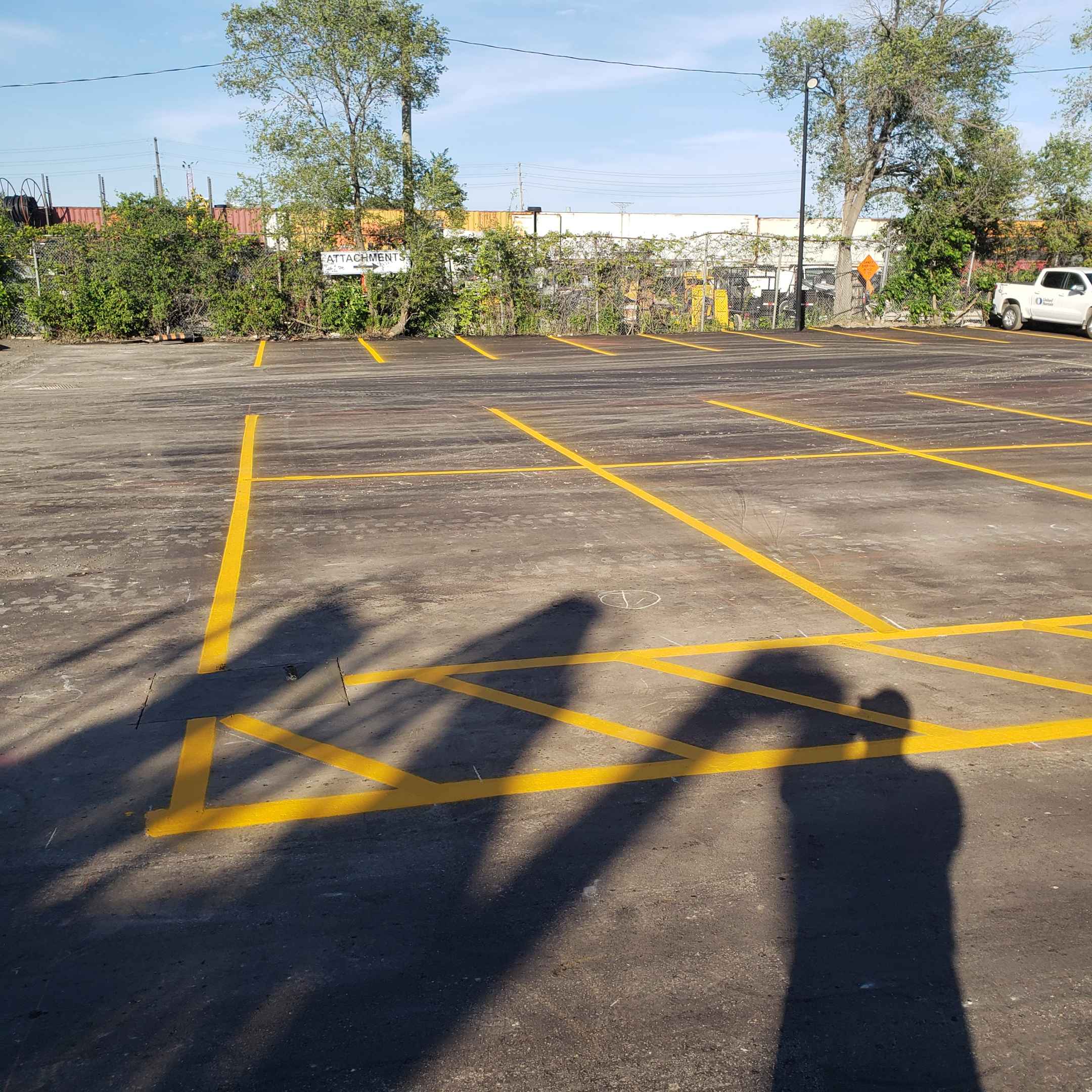
While not directly related to structural cracking, maintaining your Line Marking is essential for property management. Clear, bright lines ensure traffic flows correctly, reducing the likelihood of vehicles driving over damaged or unsealed edges of the pavement, which can accelerate edge cracking.
The Importance of Professional Expertise
Attempting DIY asphalt repairs often leads to failure. Improperly applied sealants or incorrect crack-filling materials can actually trap moisture inside the pavement, accelerating the very damage you are trying to prevent. Partnering with a professional service like Capital Parking Lot Line Painting ensures that the materials used are scientifically compatible with your specific asphalt type and local climate.
Ready to Protect Your Investment?
Don't wait for the cracks to become potholes. Regular inspections and professional maintenance are the keys to a long-lasting parking lot.