What Facility Managers Should Know About Sealcoating Curing Times
Navigating the complexities of asphalt maintenance requires more than just knowing when to apply sealant; it requires understanding the science of how that sealant hardens.
For facility managers overseeing commercial properties, a parking lot is more than just a place to park cars; it is the first impression of your business and a critical component of your asset management strategy. When it comes time to protect that investment through sealcoating, the most common logistical headache isn't the application itself—it is the waiting period.
Understanding sealcoating curing times is essential for minimizing tenant dissatisfaction and preventing premature damage to the new surface. At Capital Parking Lot Line Painting, we understand that downtime equals lost revenue, which is why precision in scheduling is just as important as precision in application.
The Critical Difference: Drying vs. Curing
One of the most frequent mistakes made by property managers is conflating "drying time" with "curing time." While they sound similar, they represent two very different stages of the chemical process.
Drying Time (Touch Dry)
Drying occurs when the solvents in the sealcoat evaporate, leaving a film on the surface. This is when the surface feels dry to the touch. In ideal conditions, this can happen in as little as 30 to 60 minutes. However, just because it is dry doesn't mean it is ready for heavy traffic.
Curing Time (Full Hardness)
Curing is a chemical reaction that occurs as the sealant bonds with the asphalt binder. This process takes much longer and is what provides the actual protection against UV rays, oil spills, and water penetration. A sealcoat that is "dry" but not "cured" can be easily scarred by a turning tire or a heavy delivery truck, ruining the finish instantly.
Factors That Influence Curing Speed
In a bustling economic hub like Brampton, weather patterns can be unpredictable. Several environmental variables will dictate how quickly your lot returns to service:
- Temperature: Warmer temperatures generally accelerate the chemical reaction, whereas cold snaps can stall the curing process entirely.
- Humidity: High humidity prevents evaporation, significantly extending the drying time.
- Sunlight: Direct UV exposure can help dry the surface, but extreme heat can cause the sealant to dry too quickly, leading to cracking.
- Material Type: Different sealants (coal tar vs. asphalt emulsion) have varying chemical compositions and curing profiles.
Strategic Planning for Facility Managers
To ensure a seamless project, Capital Parking Lot Line Painting recommends a proactive approach to scheduling. You shouldn't just book a contractor; you should book a window of opportunity.
The Integration of Line Marking
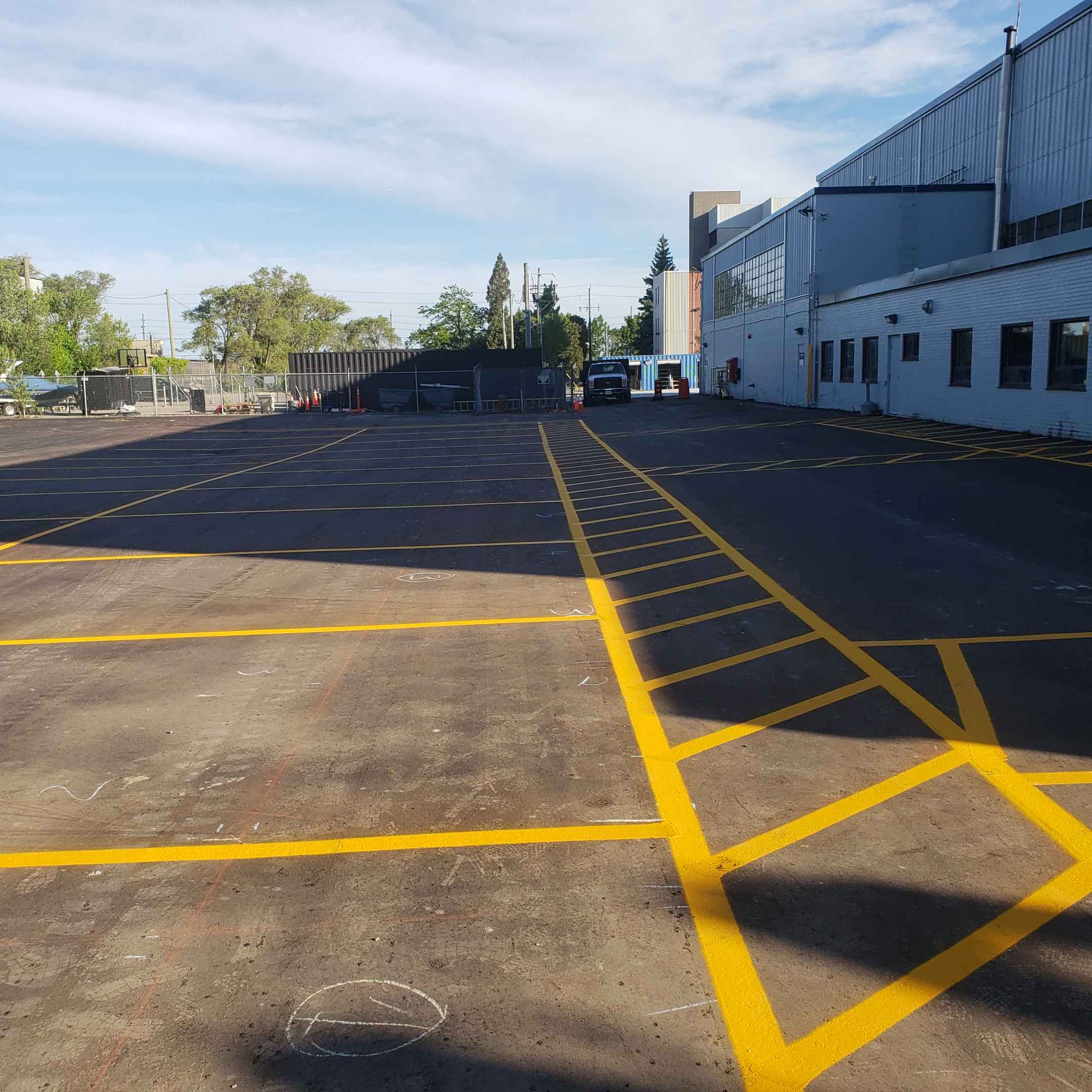
A common question we receive is whether Line Marking should occur before or after sealcoating. To achieve the highest quality finish, Line Marking should always be performed after the sealcoat has reached a specific level of cure. If you apply paint to a fresh, wet sealcoat, the paint will not adhere properly and will peel within weeks. Planning your maintenance window to include both sealcoating and subsequent Line Marking is vital for a cohesive, professional look.
Common Mistakes to Avoid
Avoid these pitfalls to ensure your maintenance budget is well-spent:
- Opening the lot too early: Even if the surface looks black and dry, heavy vehicle movement can cause "tracking," where the sealant sticks to tires and pulls up from the ground.
- Ignoring the forecast: Scheduling work in Brampton during a week known for heavy rain can lead to total project failure.
- Neglecting surface prep: If the asphalt isn't cleaned properly, the sealant won't bond, and the curing process will be compromised from the start.
Pro Tip: Always request a written timeline from your service provider that clearly distinguishes between "vehicle-ready" time and "full-cure" time. Capital Parking Lot Line Painting provides detailed schedules to help you manage tenant expectations effectively.
Conclusion
Effective asphalt management is a balance of chemistry, meteorology, and logistics. By understanding the nuances of curing times, facility managers can protect their properties, ensure safety, and maintain the professional aesthetic that their tenants expect. When you are ready to revitalize your surfaces, remember that patience during the curing phase is the key to long-term durability.