What Facility Managers Should Know About Sealcoating Curing Times
Understanding the science of drying and curing is essential for maintaining seamless operations and long-lasting pavement protection.
For facility managers in high-traffic areas, pavement maintenance is not just about aesthetics; it is about asset preservation and safety. When you schedule a sealcoating project, the most critical variable you must account for is not the application itself, but the time that follows. Curing is the chemical process that allows the sealant to harden and bond with the asphalt, and rushing this process can lead to premature failure.
At Capital Parking Lot Line Painting, we understand that facility managers operate on tight schedules. Whether you are managing a retail complex in Windsor or an industrial warehouse, knowing exactly how long your parking lot will be out of commission is vital for minimizing tenant dissatisfaction and logistical headaches.
Drying vs. Curing: Understanding the Difference
One of the most common misconceptions in facility management is treating "drying" and "curing" as the same thing. To manage your property effectively, you must distinguish between the two.
The Drying Phase
Drying refers to the evaporation of the solvents or water within the sealant. Once the surface is no longer tacky to the touch, the sealant is "dry." However, a dry surface is not necessarily a strong surface. If vehicles drive on the asphalt too early, they can cause scuffing, tracking, or even peel the sealant right off the ground.
The Curing Phase
Curing is a much deeper, chemical process. It is the stage where the sealant undergoes a reaction to create a durable, protective barrier. This phase takes significantly longer than drying. During curing, the sealant reaches its maximum hardness and its ability to resist oil spills, UV rays, and heavy vehicular weight. Capital Parking Lot Line Painting recommends allowing the full curing window to pass before resuming heavy traffic patterns.
Key Factors That Influence Curing Speed
Curing times are not universal; they are highly dependent on environmental conditions. In a top 30 city like Windsor, where weather can shift rapidly, facility managers must remain vigilant.
- Ambient Temperature: Warmer temperatures generally accelerate the chemical reaction, while cold temperatures can stall the process entirely.
- Humidity Levels: High humidity can slow down the evaporation of water-based sealants, extending the drying time.
- Sunlight Exposure: Direct UV rays can help dry the surface faster, but excessive heat can sometimes cause the sealant to dry too quickly on the surface, trapping moisture underneath.
- Sealant Composition: Different types of sealants (coal tar vs. asphalt emulsion) have varying chemical profiles and required timelines.
- Substrate Moisture: If the underlying asphalt is saturated with moisture, the sealant will struggle to bond, significantly delaying the cure.
The Importance of Timing Line Marking
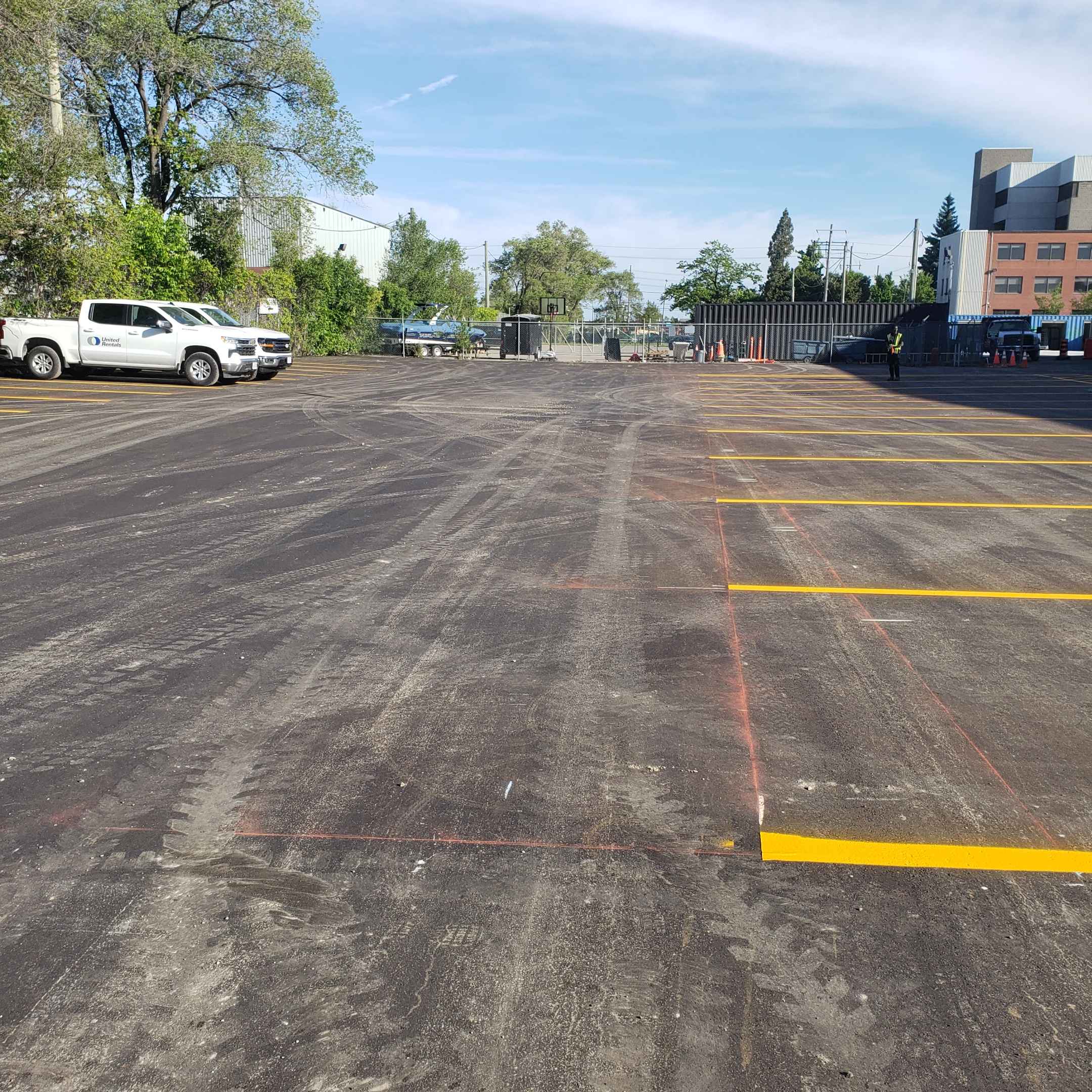
A common mistake facility managers make is scheduling Line Marking too close to the sealcoating application. For a professional finish, the sealant must be fully cured before any Line Painting begins. If you apply paint or markings to a sealant that hasn't reached its full hardness, the paint will not adhere properly and will likely flake or peel within months.
By coordinating with Capital Parking Lot Line Painting, you can ensure that your maintenance schedule follows a logical progression: cleaning, sealcoating, curing, and finally, the application of fresh Line Painting to define stalls and walkways.
Plan Ahead for Success
Don't let a lack of preparation lead to a failed project. Always request a detailed timeline from your contractor that accounts for both drying and curing. A successful project is one that looks great today and remains durable for years to come.
Common Mistakes to Avoid
To ensure your investment is protected, avoid these frequent errors:
- Opening parking lots to traffic immediately after the surface feels "dry."
- Ignoring weather forecasts that predict rain or high humidity during the application window.
- Failing to account for the time needed for Line Marking to be integrated into the schedule.
- Choosing a contractor based solely on speed rather than the quality of the curing process.