What Facility Managers Should Know About Sealcoating Curing Times
Understanding the science of drying vs. curing to protect your pavement investment.

For facility managers, the lifecycle of an asphalt parking lot is a constant balancing act between budget management and operational continuity. One of the most critical maintenance tasks is sealcoating—a process that protects the asphalt from UV damage, water penetration, and oil spills. However, the most common mistake made during this process is a misunderstanding of time. Specifically, the distinction between when a surface is "dry to the touch" and when it is truly "cured."
At Capital Parking Lot Line Painting, we understand that every hour your parking lot is closed represents lost revenue or logistical headaches for your tenants. Navigating the timeline of sealcoating is essential to ensuring that your maintenance project is a success rather than a disruption.
Drying vs. Curing: The Crucial Distinction
It is vital to understand that these are two different chemical and physical processes. If you rush your facility back into service based solely on the surface appearance, you risk permanent damage to the sealant.
1. The Drying Phase
Drying refers to the evaporation of the liquid carriers in the sealer. Once the surface no longer feels tacky or wet, it is considered "dry." Typically, this can happen within a few hours under ideal conditions. However, a dry surface is not a strong surface.
2. The Curing Phase
Curing is a chemical reaction where the sealer hardens and bonds with the asphalt substrate to create a protective barrier. This process can take anywhere from 24 to 72 hours depending on the product used and environmental factors. During this window, the sealant is still vulnerable to tire marks, heavy loads, and chemical spills.
Factors That Influence Curing Speed
As a facility manager in a top 30 city like Peterborough, you are likely dealing with fluctuating seasonal weather. The environment plays a massive role in how quickly your asphalt recovers.
- Temperature: Warmer temperatures generally accelerate the chemical reaction, while cold snaps can stall the curing process entirely.
- Humidity: High humidity levels slow down the evaporation process, extending the drying time.
- Sunlight Exposure: Direct UV rays can assist in drying, but excessive heat can sometimes cause the sealer to dry too quickly on the surface, trapping moisture underneath.
- Product Composition: Coal tar-based vs. asphalt-emulsion sealers have different chemical profiles and drying requirements.
Coordinating with Line Marking Services
A common question we receive at Capital Parking Lot Line Painting is: "When can we do the line marking?"
Timing your line marking is a delicate part of the project schedule. If you apply paint too early, the weight of the application equipment or the chemical composition of the paint can disturb the soft sealer, leading to peeling or uneven colors. Conversely, waiting too long can lead to scheduling delays that push your project into a different weather window.
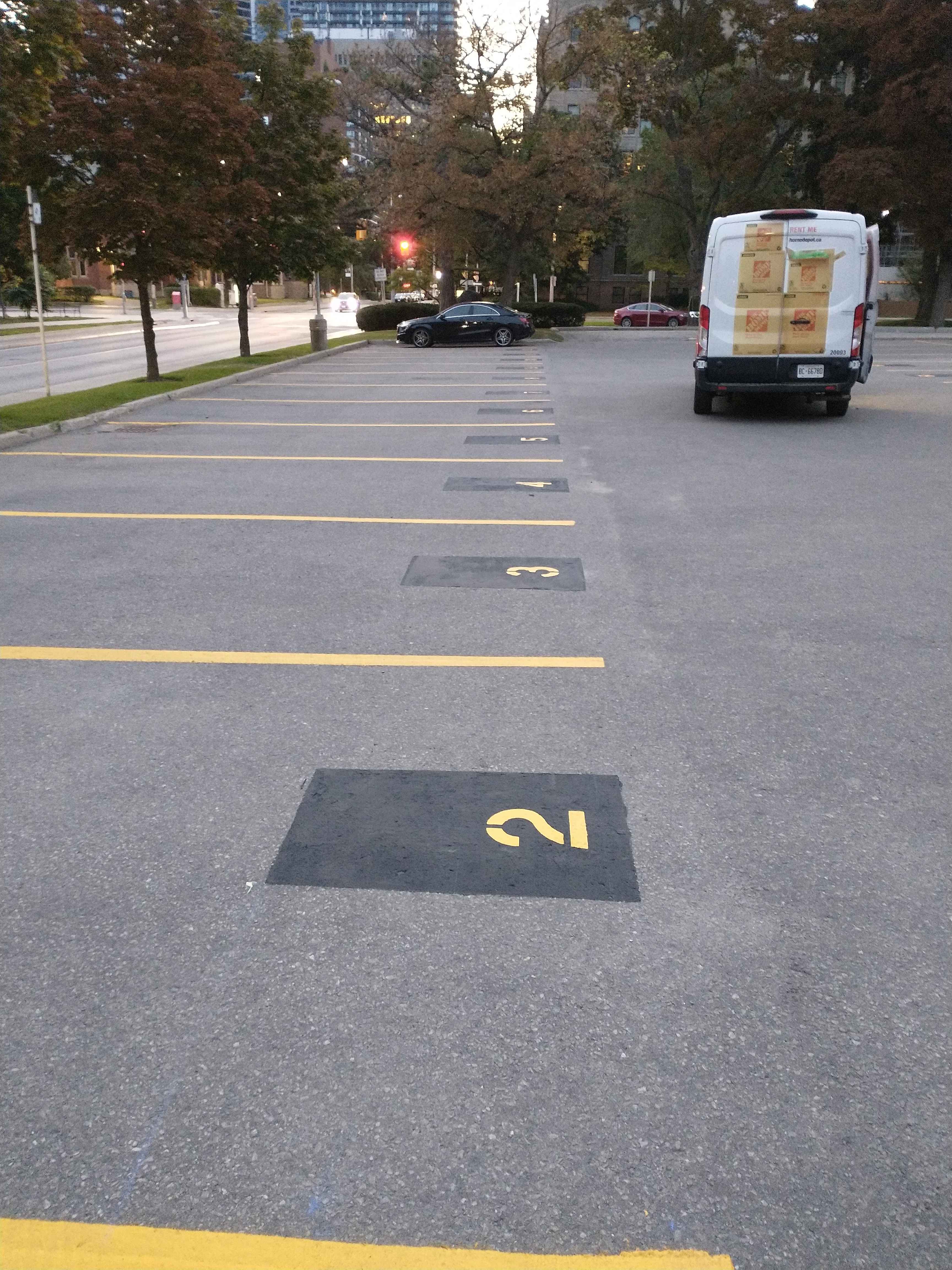
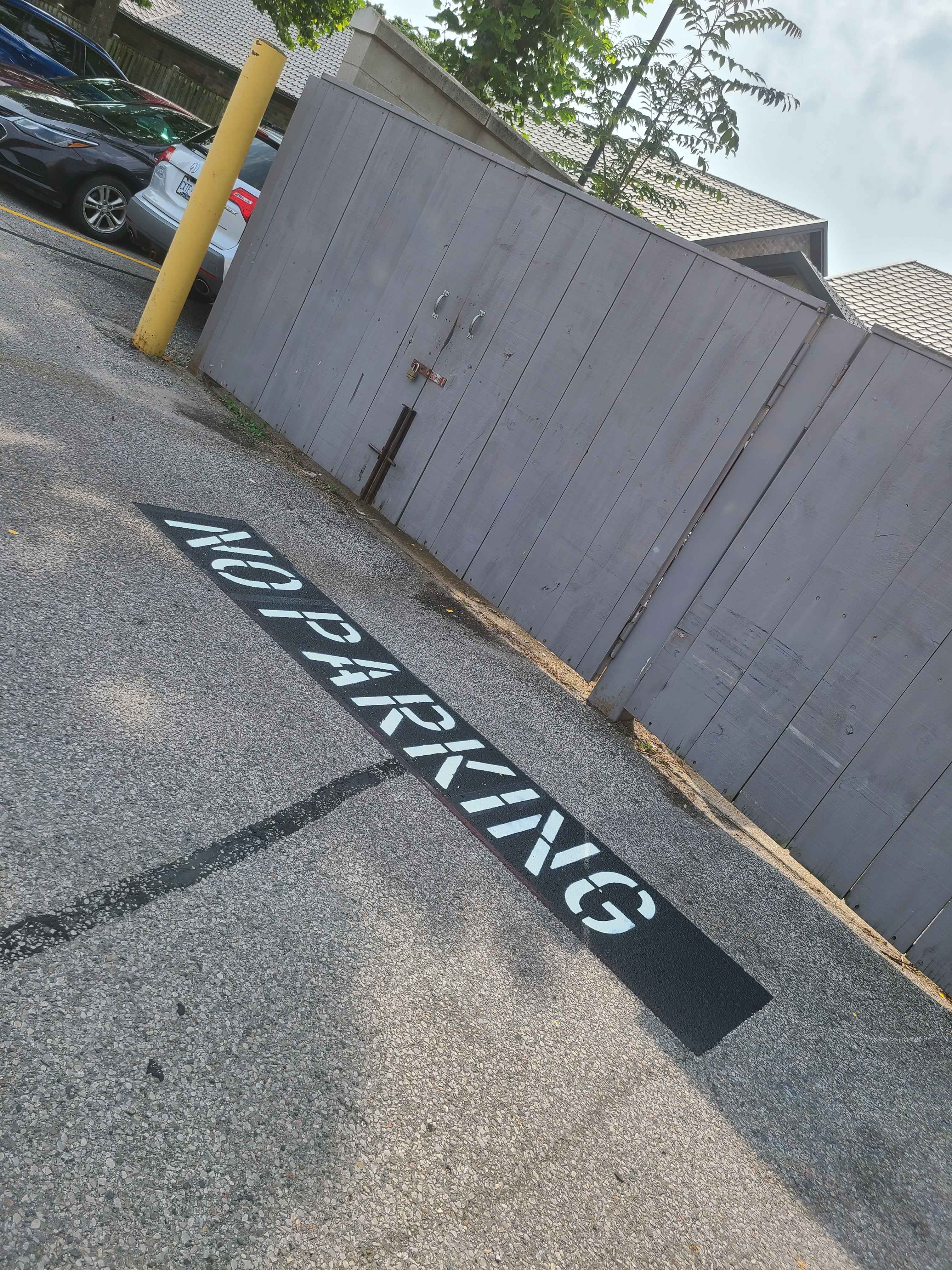
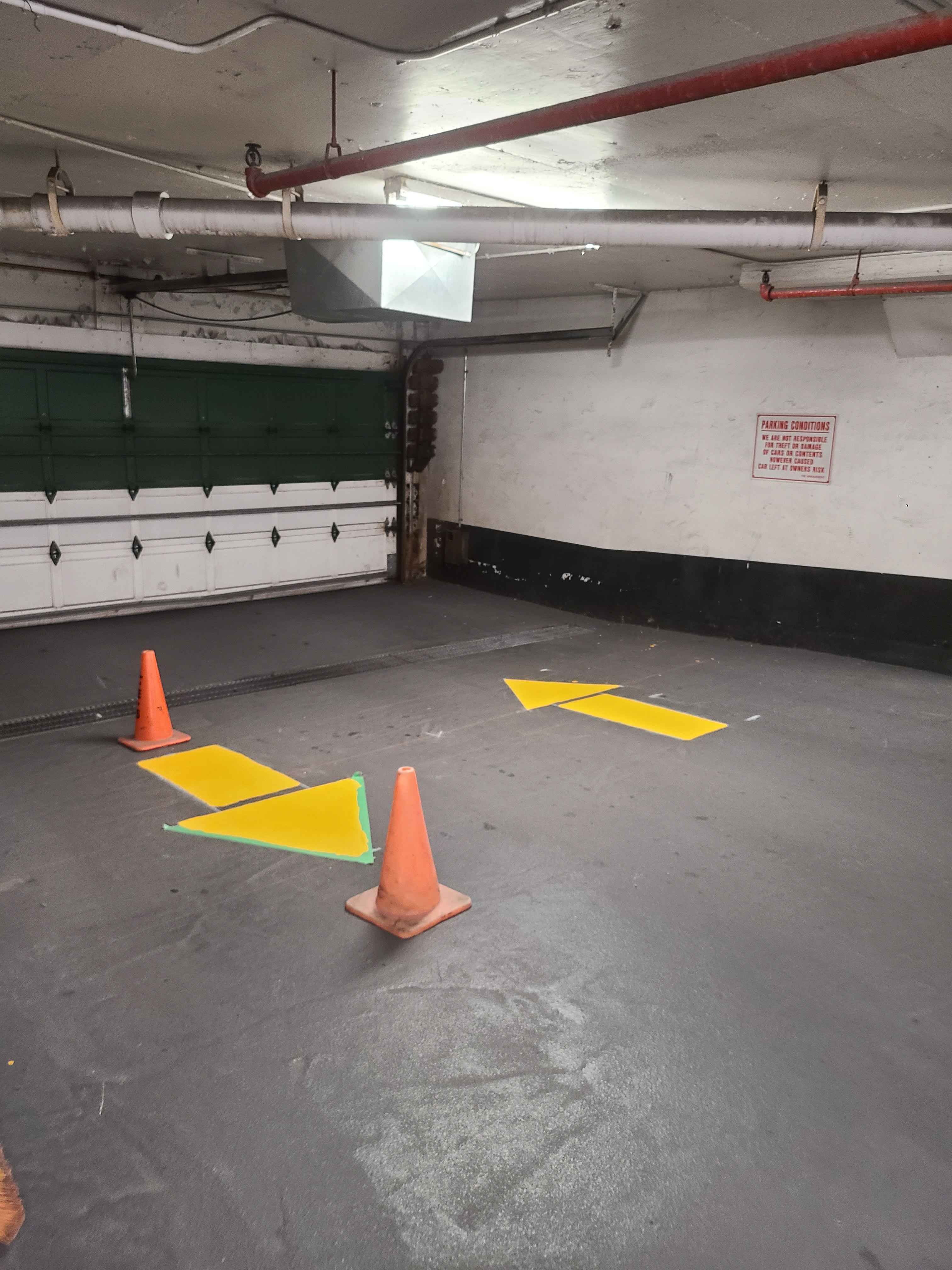
Professional teams like Capital Parking Lot Line Painting coordinate these steps meticulously. We ensure the sealcoat has reached a sufficient level of hardness before our crews arrive to perform precision line marking, ensuring crisp, durable lines that adhere perfectly to the new surface.
Common Mistakes to Avoid
To ensure your maintenance budget is used effectively, avoid these frequent pitfalls:
Premature Traffic Re-entry: Allowing vehicles onto the lot before the curing window has closed can result in "ghosting" or permanent tire tracking in the sealant.
Ignoring Weather Forecasts: Scheduling work right before a heavy rainstorm in Peterborough can wash away the sealer before it has a chance to bond.
Summary Checklist for Facility Managers
Before you sign off on your next asphalt project, ensure you have checked the following:
- Have we accounted for a 48-72 hour window for full curing?
- Is the weather forecast clear of heavy rain for at least 24 hours post-application?
- Have we scheduled the line marking to occur only after the sealer has stabilized?
- Does the contractor provide a specific timeline based on the current humidity and temperature?
Properly managed curing times lead to longer-lasting pavement and reduced long-term maintenance costs for commercial properties.