Top Misconceptions About Sealcoating in Commercial Lots
Maintaining a commercial parking lot is more than just an aesthetic choice; it is a critical component of property management and liability reduction. However, many property owners fall victim to outdated information and common myths.
The Importance of Professional Asphalt Care
For business owners in Oshawa, a top 30 city in Ontario, the weather can be incredibly harsh on asphalt. From freezing winters to scorching summer sun, the expansion and contraction of the pavement can lead to premature cracking and degradation. This is where sealcoating becomes essential. At Capital Parking Lot Line Painting, we see firsthand how proactive maintenance can save a lot from total reconstruction.
Sealcoating acts as a protective barrier, shielding the asphalt from UV rays, water penetration, and chemical spills. Yet, despite its benefits, several misconceptions persist in the industry, often leading property managers to make sub-optimal decisions regarding their facility maintenance.
Myth #1: Sealcoating is Just for Aesthetics
One of the most pervasive myths is that sealcoating is merely a way to make a parking lot look "new" or "black." While a freshly sealed lot certainly improves the curb appeal of your business, its primary function is structural protection. Without a sealcoat, the oils in the asphalt evaporate due to UV exposure, making the surface brittle and prone to crumbling.
By neglecting sealcoating, you aren't just losing a shiny surface; you are inviting water into the sub-base, which leads to potholes and expensive structural failures. Capital Parking Lot Line Painting recommends sealcoating as a preventative measure to stop small cracks from becoming massive liabilities.
Myth #2: You Can Do It Yourself with DIY Products
Many property managers believe that the sealants available at local hardware stores are equivalent to the industrial-grade materials used by professionals. This is a dangerous misconception. Professional sealants are formulated for high-traffic commercial environments and have different viscosity and durability profiles than consumer-grade products.
When you hire a specialist, you aren't just paying for the liquid in the bucket; you are paying for the preparation, the application precision, and the long-term durability. Improper application can lead to uneven surfaces, peeling, or even damage to the existing asphalt structure.
Myth #3: Sealcoating Fixes Large Cracks and Potholes
This is perhaps the most costly mistake a property owner can make. Sealcoating is a preventative maintenance tool, not a repair tool. If your lot already has significant cracks, depressions, or potholes, applying sealcoat over them will only hide the problem temporarily while potentially making it worse by trapping moisture underneath.
A proper maintenance program should follow a specific hierarchy of care:
- 1. Crack Filling: Sealing existing cracks to prevent water ingress.
- 2. Patching: Repairing potholes and structural depressions.
- 3. Line Marking: Refreshing safety markings and directional arrows for traffic flow.
- 4. Sealcoating: Applying the protective top layer once repairs are complete.
- 5. Line Painting: Finalizing the lot with crisp, high-visibility markings.
At Capital Parking Lot Line Painting, we emphasize that sealcoating should be the "finish" to a well-prepared surface, not a "band-aid" for a broken one.
The Synergy of Sealcoating and Line Marking
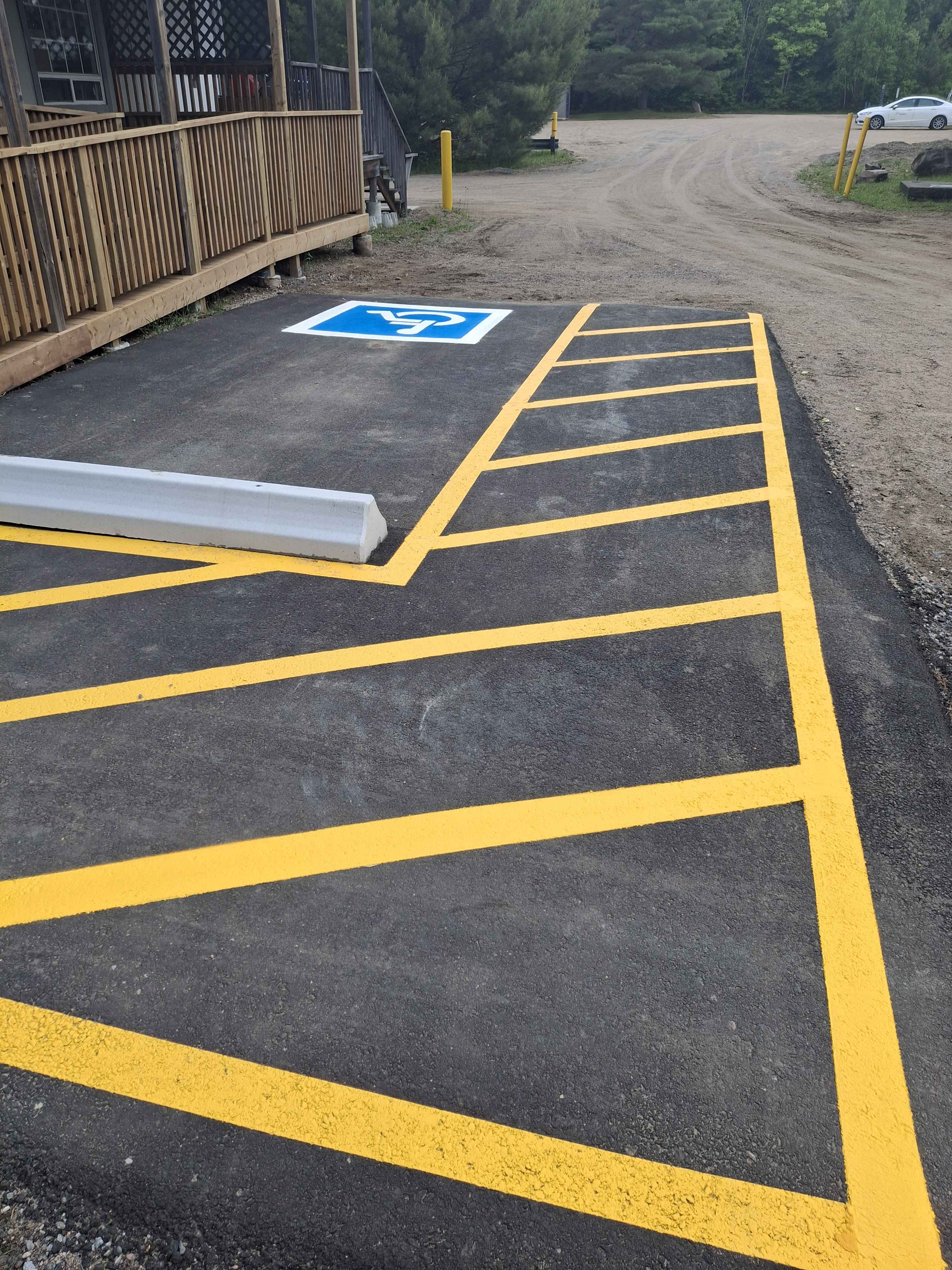
A common oversight is treating sealcoating and line marking as entirely separate concerns. In reality, they work hand-in-hand to ensure safety and compliance. Once a lot is sealed, the surface is primed and ready for fresh line painting. This ensures that your parking stalls, ADA-compliant spaces, and fire lanes are highly visible and professional in appearance.
In a busy urban center like Oshawa, clear line marking is essential for managing vehicle flow and preventing accidents. A lot that is freshly sealed and clearly marked sends a message to your customers that your business is well-managed and attentive to detail.
Ready to Protect Your Investment?
Don't wait for the asphalt to fail. Proactive maintenance is the smartest way to manage your commercial property's lifecycle. Contact the experts to schedule an assessment of your lot today.