Line Painting Design Tips for Retail Parking Lots
Maximize your retail space, enhance customer safety, and improve traffic flow with professional line marking strategies.
First impressions are everything in the retail industry. Before a customer even walks through your front doors, they interact with your parking lot. A well-organized, clearly marked parking area signals professionalism, safety, and efficiency. Conversely, faded or confusing markings can lead to frustration, accidents, and lost revenue. At Capital Parking Lot Line Painting, we understand that effective line marking is not just about aesthetics; it is about functional design that supports your business operations.
Whether you are managing a large shopping complex or a boutique retail outlet in a bustling area like Newmarket, optimizing your asphalt layout is a critical component of facility management. In this guide, we will explore the essential design principles for high-performance retail parking lots.
1. Prioritizing Traffic Flow and Safety
The primary goal of any retail parking lot design should be the safe and orderly movement of vehicles and pedestrians. Poorly designed layouts create bottlenecks and blind spots, increasing the risk of collisions.
Clear Directional Markings
One of the most effective ways to manage traffic is through the use of directional arrows. These should be placed at key decision points, such as entrance/exit lanes and aisle intersections. Proper line marking ensures that drivers know exactly which way to turn, reducing the likelihood of head-on encounters in one-way aisles.
Pedestrian Safety Zones
In high-traffic retail environments, pedestrians are often walking between parked cars to reach the storefront. Designating clear walking paths using crosswalks and specialized line marking can significantly reduce accidents. By separating vehicle paths from pedestrian zones, you create a safer environment for families and elderly shoppers.
2. Maximizing Space Efficiency
For retail businesses, every square foot of parking space is valuable. Maximizing the number of available stalls without compromising safety is a delicate balancing act. This is where professional expertise from Capital Parking Lot Line Painting becomes invaluable.
When planning your layout, consider the following factors to optimize your capacity:
- Angle of Parking: 90-degree parking maximizes the number of stalls but requires wider aisles. Angled parking (45 or 60 degrees) often allows for narrower aisles and easier entry/exit, which can improve the overall flow in tighter spaces.
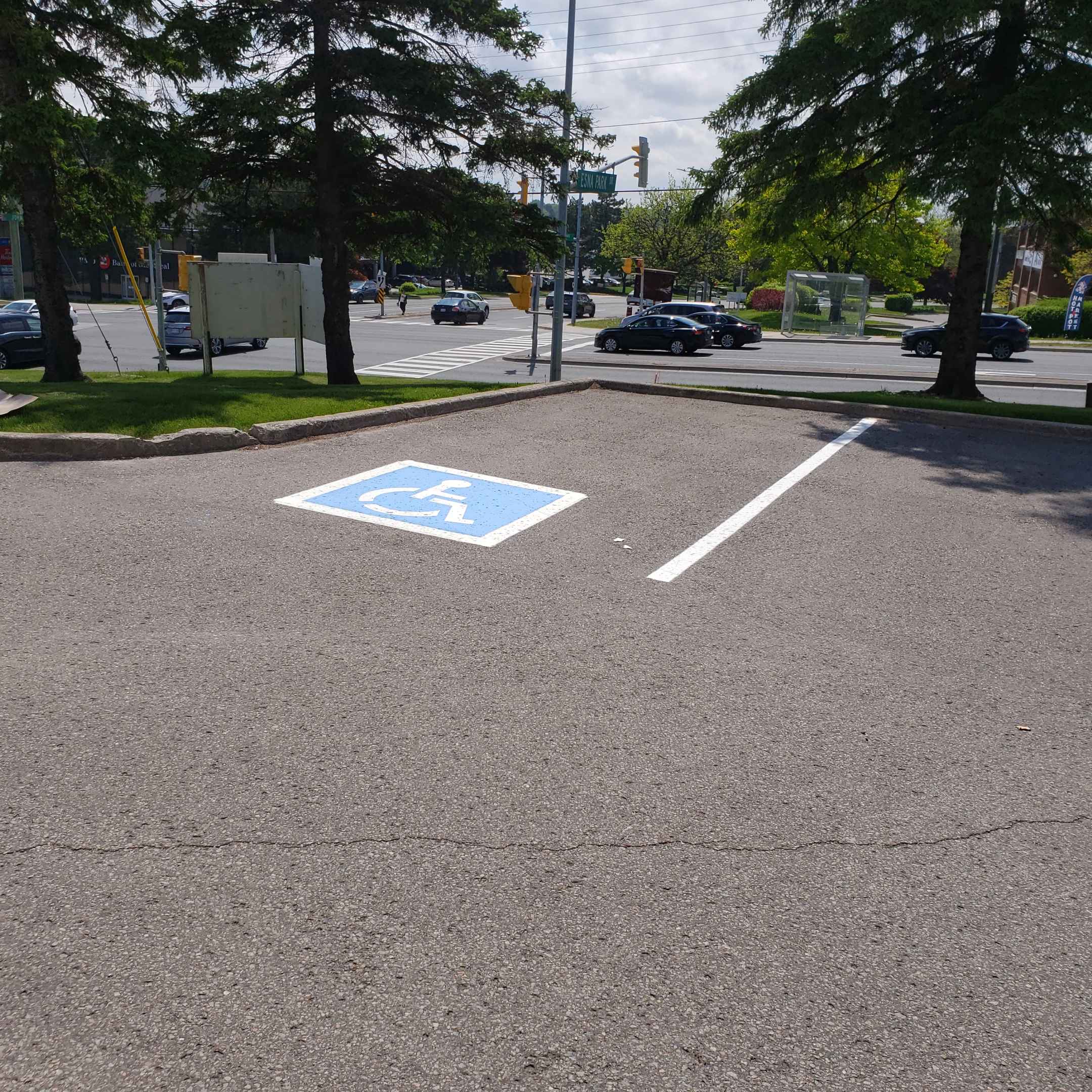
- ADA Compliance: Ensuring that accessible parking stalls are correctly placed, sized, and marked is not just a best practice—it is a legal requirement.
- Stall Sizing: While smaller stalls might fit more cars, they can lead to door dings and driver frustration. Aim for a balance that accommodates modern vehicle sizes.
- Loading Zones: Clearly marking delivery and loading zones prevents commercial vehicles from blocking customer stalls.
3. Visual Clarity and Maintenance
A design is only as good as its visibility. Over time, weather, heavy traffic, and UV exposure will cause your markings to fade. In a top 30 Ontario city like Newmarket, where seasonal changes can be harsh, regular maintenance is essential to keep your lot functional.
Color Coding and Contrast
Using high-contrast colors is vital for visibility. While white is the standard for parking stalls, yellow is often used for regulatory markings, such as "No Parking" zones or fire lanes. Using distinct colors helps drivers quickly identify rules and boundaries, reducing confusion and non-compliance.
The Importance of Regular Re-Painting
Faded lines are more than just an eyesore; they are a liability. When lines become illegible, drivers are more likely to park haphazardly or ignore traffic directions. Implementing a scheduled maintenance plan with Capital Parking Lot Line Painting ensures that your markings remain crisp, bright, and compliant year-round.
Summary Checklist for Retail Owners
Before your next line painting project, ask yourself:
- Are my pedestrian crosswalks clearly visible?
- Do my directional arrows prevent traffic congestion?
- Are my accessible parking stalls up to code?
- Is the paint color high-contrast against the asphalt?
Conclusion
Strategic line marking is a foundational element of retail success. By focusing on safety, space optimization, and visual clarity, you can create a parking environment that enhances the customer experience and protects your property. Don't leave your lot to chance—invest in professional design and execution to ensure your business stands out for all the right reasons.